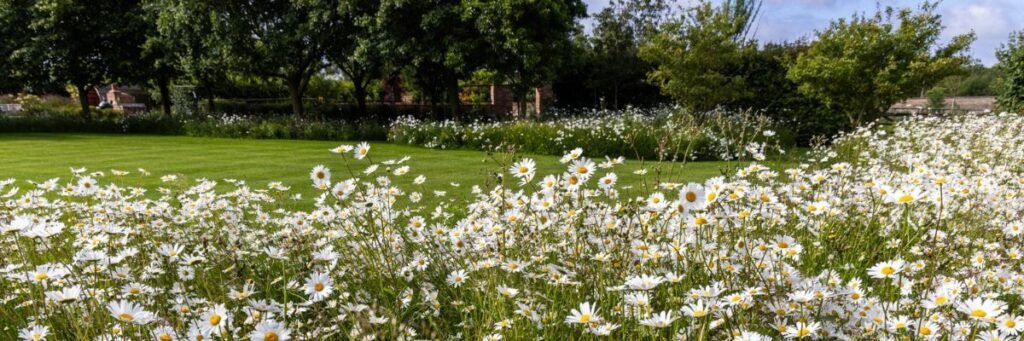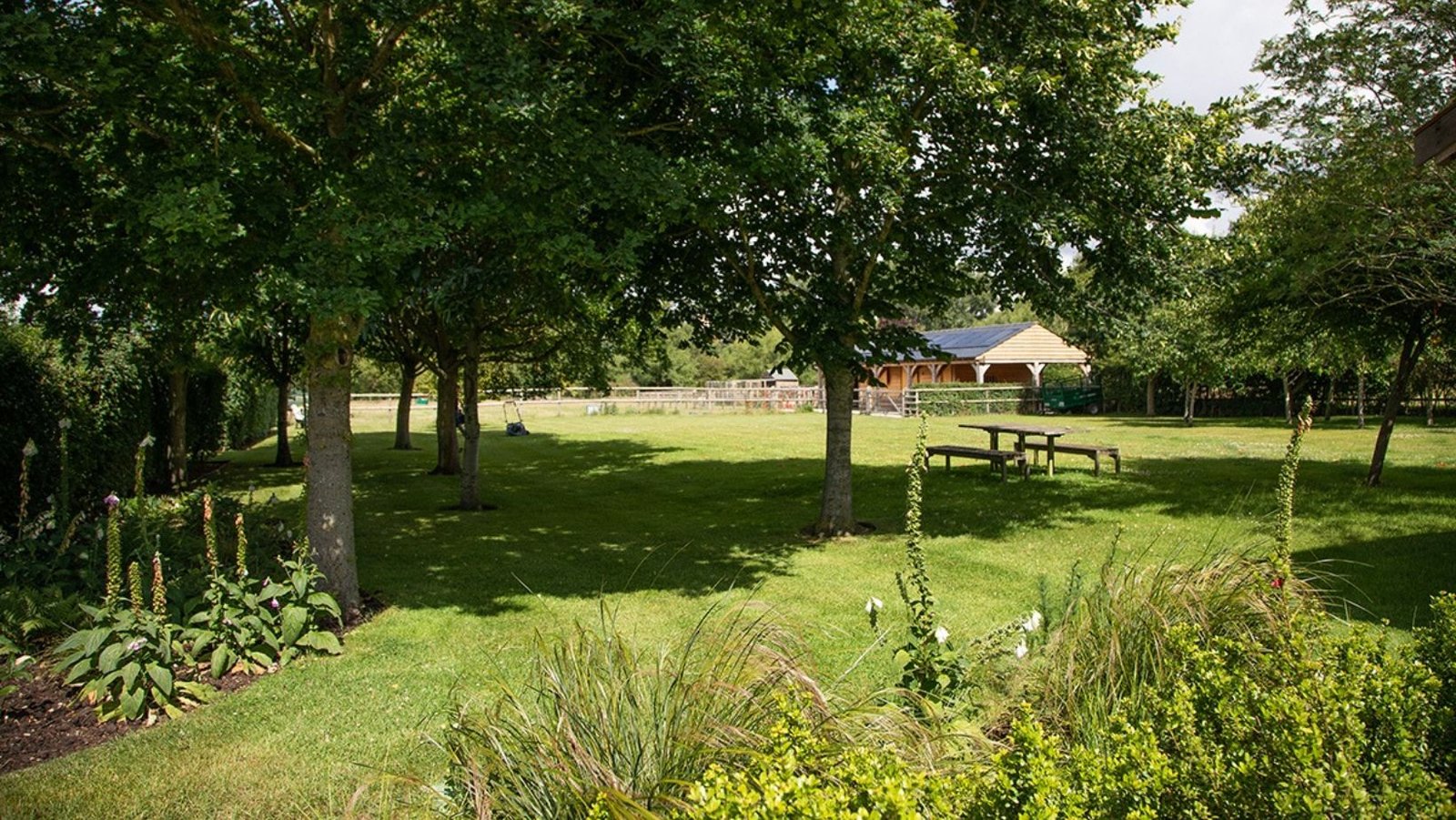
For generations, the neatly mown green lawn has been a familiar feature of British gardens. After another summer of brown, drought-stressed lawns, many gardeners are asking the same question: does the traditional lawn still make sense in a changing climate? In the first of our two-part blog series, we look at how changing weather patterns are affecting lawns across South Oxfordshire and beyond, challenge some common assumptions about what a “healthy” lawn should look like, and explore how gardens may need to evolve for a changing climate.
Rethinking the Lawn for a Changing Climate
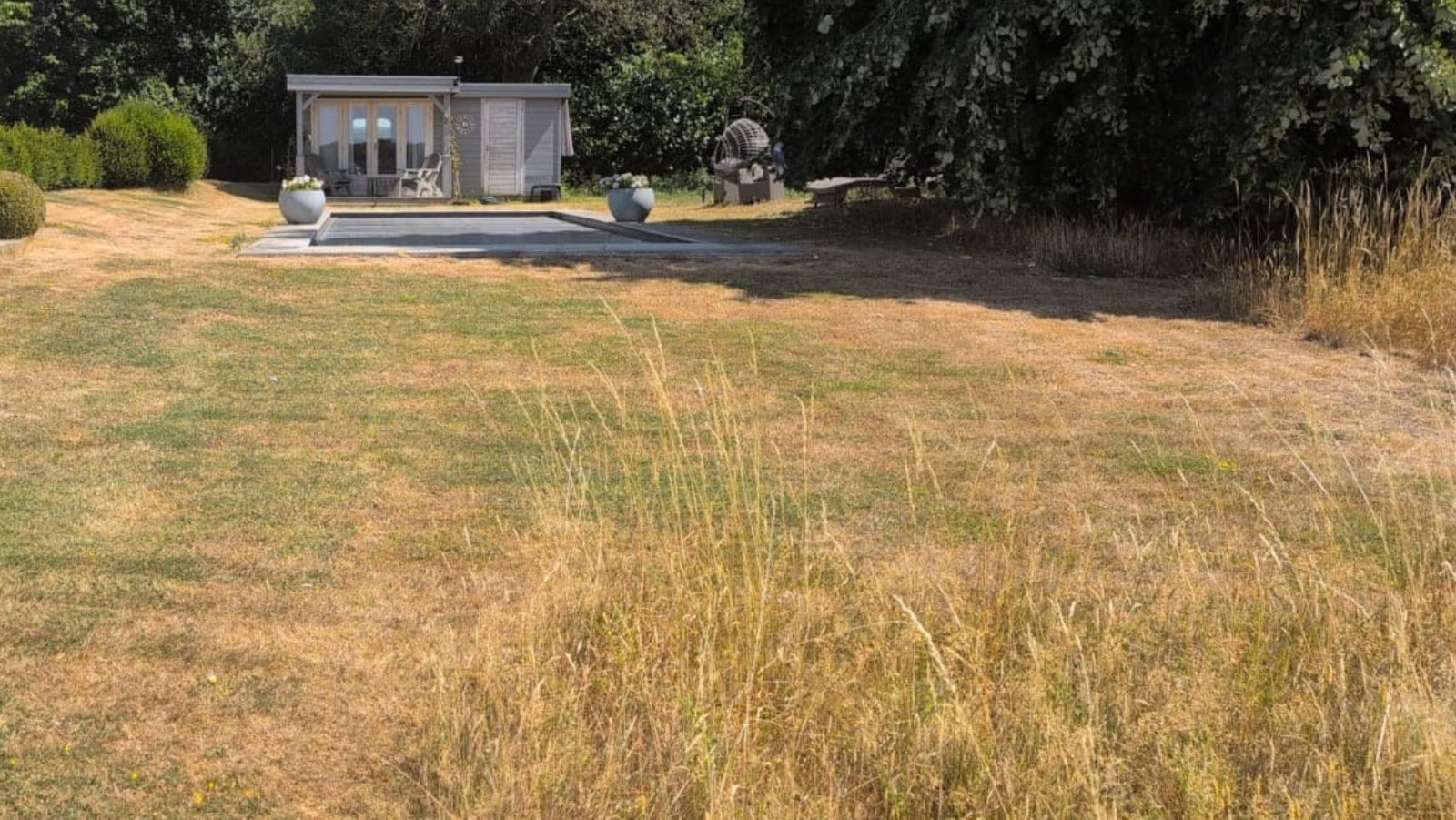
Across South Oxfordshire, it’s safe to say that lawns have not been looking their best this year. Many went brown, brittle and straw-like and stayed that way for weeks. You may have spent years keeping your lawn in good shape and now find yourself wondering whether, if we’re going to get more summers like this, a formal lawn is a good idea at all.
Well, you’re not alone.
Here, in Part One of a two-part series, we look at what’s been happening to our lawns this year and where we think things are heading. Part Two then sets out seven practical ways to respond to the changes we are all experiencing.
What’s Actually Happening to Our Lawns
Before taking any drastic action, it’s worth knowing that a brown lawn in a heatwave is rarely a dead one. Grass has a built-in survival trick for exactly this weather. When water runs short, grass deliberately lets its leaves turn brown and dry while protecting its crown and roots underground. It isn’t necessarily dead, it’s just dormant, in the same way it sits quietly through a cold winter. Grass is built to come back.
British lawn grasses can typically sit brown for six to eight weeks of dry weather and green up again within four to six weeks once the rain returns. A gentle tug on a handful of grass (living grass resists, rather than pulling away freely) or a scratch into the soil for pale, living runners will usually put your mind at rest long before autumn does. The lawn isn’t failing. It’s doing exactly what it’s built to do, which is worth remembering the next time a dry August has you eyeing up a roll of turf, or worse, a roll of plastic.
Three things have come together this year,
1. The climate has shifted.
South Oxfordshire is already one of the driest parts of England. The Met Office recorded 2025 as the UK’s warmest summer on record, following one of the driest springs England has seen. These aren’t one-off events any more. They’re likely the new normal, and the RHS agrees: in January 2026 it announced emergency plans to future-proof its own gardens for drought, describing it plainly as “adapting to the new normal.”
2. Rainfall has become less predictable, not just scarcer.
It isn’t only about less water overall. It’s the pattern breaking down: long dry spells followed by sudden heavy downpours the ground can’t absorb fast enough. A lawn built to cope with steady, gentle British rain struggles with either extreme.
3. Most lawns were never built for this.
Standard lawn seed is dominated by ryegrass, chosen because it establishes fast and looks lush on the packet. But it’s a shallow-rooted grass, bred for cool, damp conditions, and it browns quickly the moment water runs short. Fine fescues and brown top bent, native to leaner, drier ground, root far deeper and stay green considerably longer. The RHS now recommends fescue-rich mixes for most British gardens.
A British Institution – Myth or Reality?
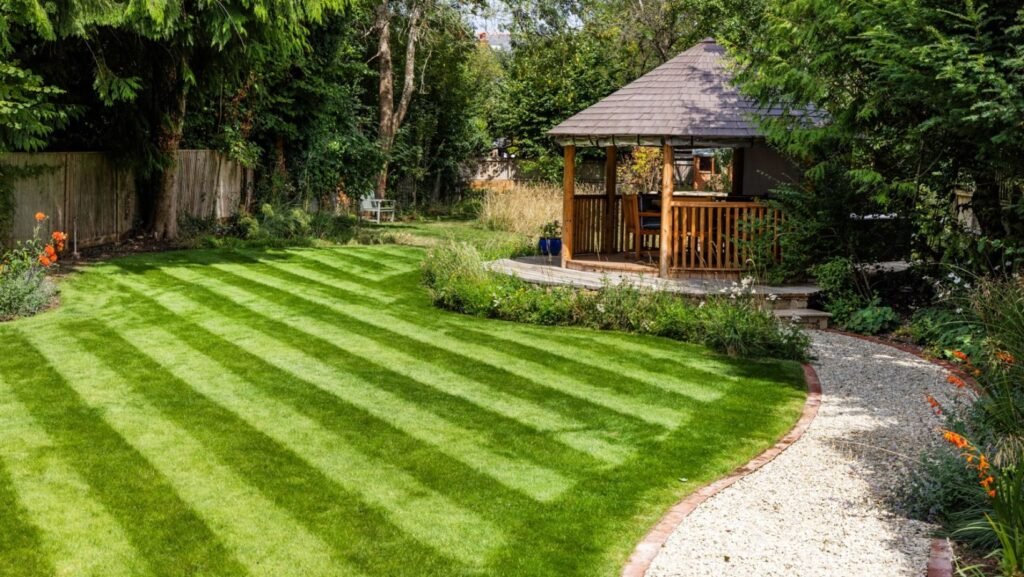
The perfectly uniform, striped green lawn isn’t in fact the timeless British tradition we might be led to believe; it’s a fairly recent invention. It was only once mains water and mechanical mowers became widely available in the 20th century that lawns became the norm for ordinary gardens rather than just grand estates. While the design and construction of our homes has adapted to changes in the climate and moved into the 21st century, many of our gardens have remained rooted in the past.
The Future of the British Lawn – New Species and Wildflowers
Looking five to ten years out, we expect to see real shifts in the role lawns play in British gardens, and the experts are already pointing in the same direction.
Species-rich lawns will stop being seen as untidy and start being seen as smart. Increasingly, we’re helping clients create wildlife friendly garden designs that blend traditional lawn areas with clover-rich turf, meadow planting and pollinator-friendly borders.
Recently on BBC Radio 4’s Gardeners’ Question Time, Bethan Collerton, Head Gardener at Birmingham Botanical Gardens, made a point that’s stayed with us: we need to stop thinking of the lawn as one single species of grass. In a climate that’s becoming less predictable year to year, a species-rich lawn with clover, yarrow, and self-heal (Prunella vulgaris) woven through the grass, will always have something in the mix that’s thriving. What struggles in a dry year might flourish in a wet one, and vice versa. The diversity of the species is what creates the resilience to changes in our climate. Instead of weeding out clover and self-heal, we can deliberately encourage them.
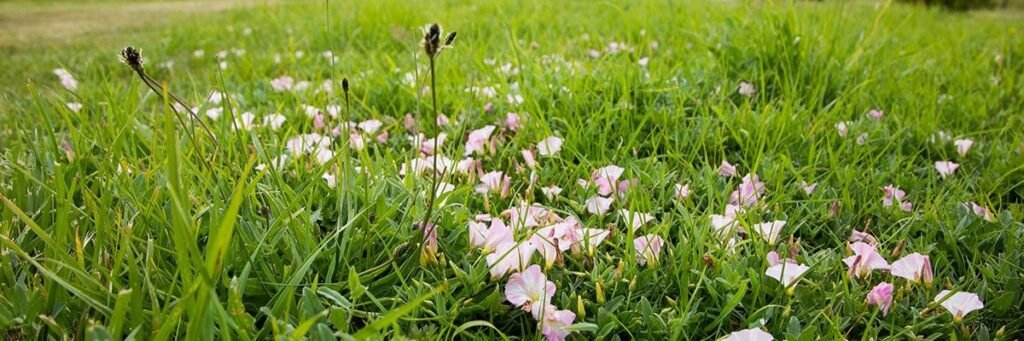
We’ll also see a real shift away from ryegrass towards Britain’s own native grasses. David Hedges-Gower, chairman of the Lawn Association, has been making this case for years. Ryegrass dominates the seed trade because it’s cheap and quick to establish, but it’s shallow-rooted and thirsty, never really suited to how British summers are turning out. Our native fescues and bents, by contrast, have been coping with exactly this kind of unpredictability for centuries. Nothing exotic needs importing; the answer has been growing here all along.
Wildlife strips and wildflower patches will become a normal part of even quite formal gardens, not a niche add-on reserved for the ecologically minded.
Less Lawn, More Alternatives
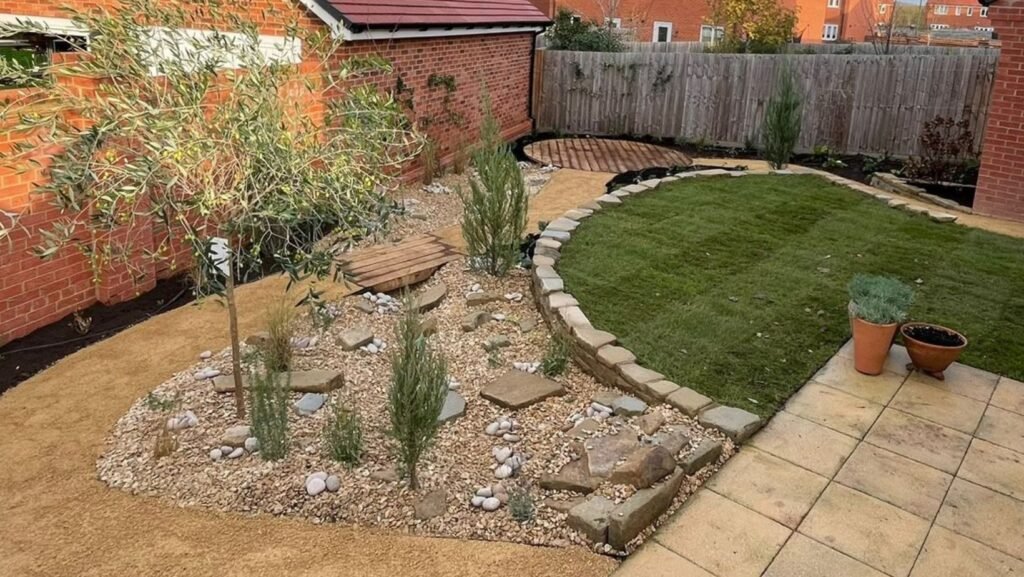
Overall, the traditional British lawn will stop being the automatic default for every spare patch of ground. Where grass has always struggled, gravel gardens and drought-tolerant planting will take over instead, not as a compromise, but because they simply work better there. Thoughtful garden redesign can help identify which areas are best suited to lawn and which may perform better with planting, gravel or other low-maintenance alternatives. Less lawn, better placed, doing more.
Even The National Trust has been quietly loosening its own approach to lawns for several years, mowing less often and letting bulbs and wildflowers into fine turf. The response from visitors has been telling. Not disappointment. Recognition: “thank goodness yours looks like mine”.
None of this means giving up on lawns. It means asking better questions of them: how much of the garden actually needs to be formal lawn, what grass you’re growing and why, and how you look after what you keep. A brown lawn in August is no longer a sign that something’s gone wrong. It’s a sign the climate has changed faster than the standard British lawn has.
What to Do About It
First, read part two, where we set out 7 Practical Ways to Rethink Your Lawn.
If you already know you need help rethinking your lawn, get in touch and we can talk through your options.