Brown patches, longer dry spells and increasingly unpredictable weather have left many gardeners wondering what comes next. As we explored in Part One of this two-part blog series, our climate is changing, but that doesn’t mean our gardens can’t adapt. There are plenty of ways to create a more resilient garden that supports wildlife and reduces maintenance. Here we look at seven practical ways to rethink your lawn, from small changes you can make this autumn to larger ideas that could transform how your garden looks, feels and functions.
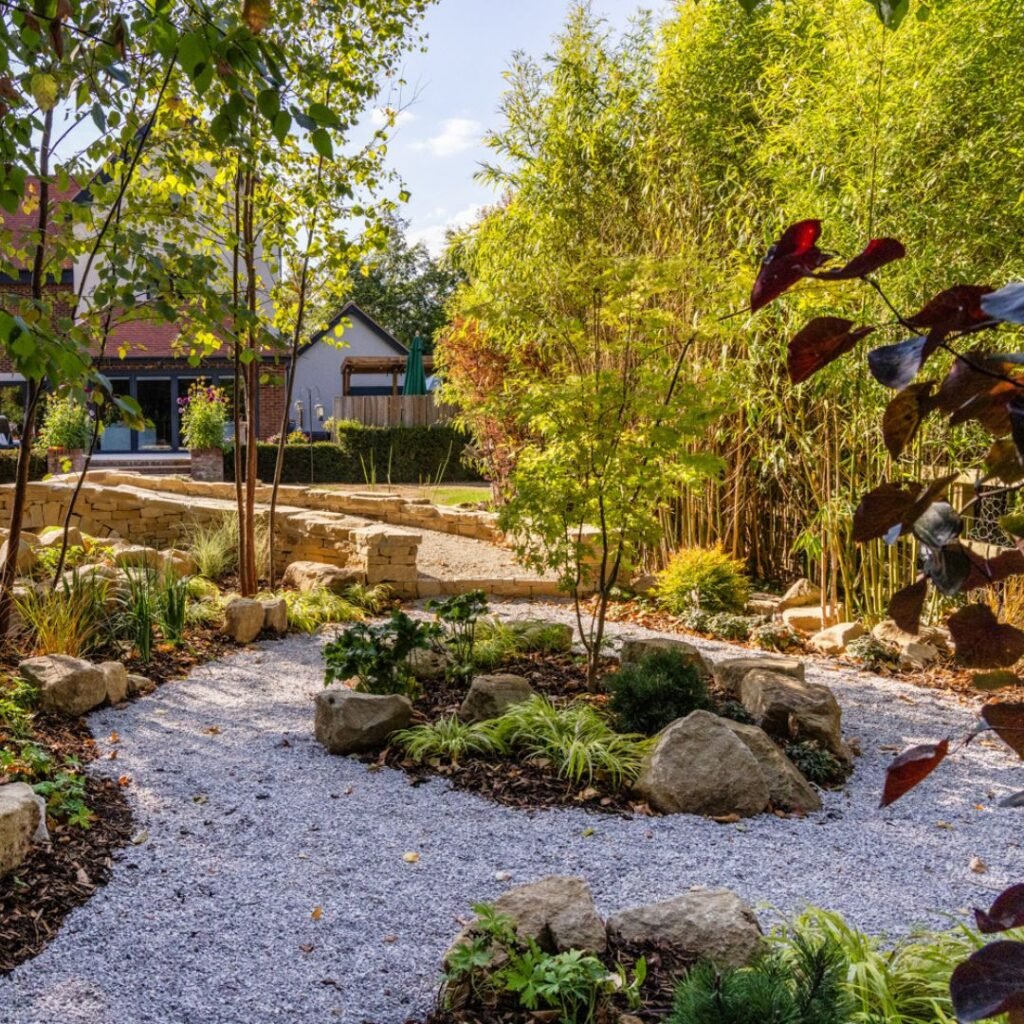
1. Make More Space for Plants, Biodiversity and Beauty
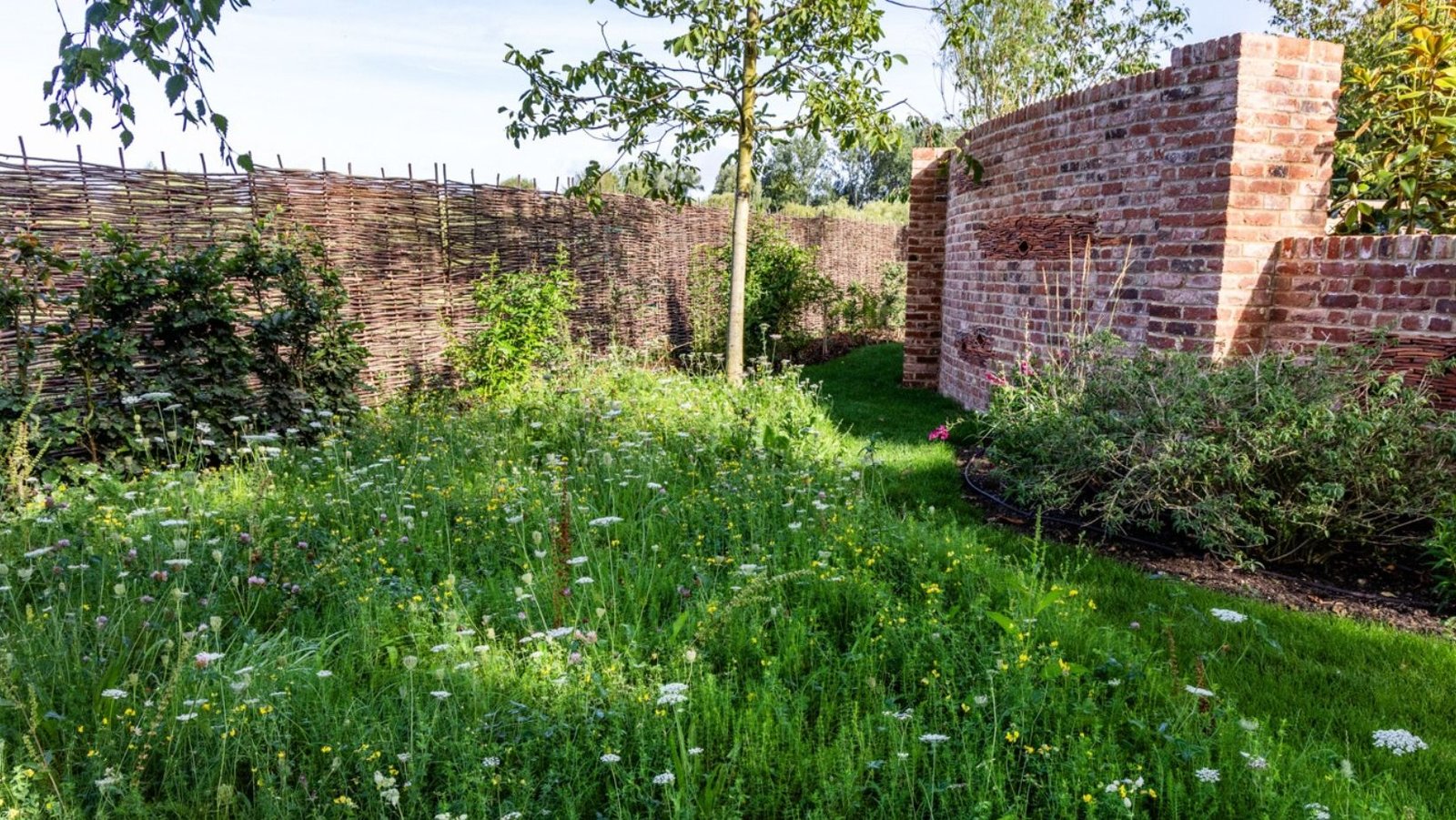
Mown grass right up to the fence is more habit than design. Replacing grass with a border or a wildflower patch or mixed planting means less mowing and less watering. It gives far more back in return: colour, scent and life through every season, not just a green backdrop for a few months of the year.
One of the gardens our team looks after was almost entirely lawn, with just a couple of mature fruit trees. Under our care, the lawn has been reduced by two-thirds, with a wildflower meadow, a deep mixed border, and a bulb and fern understorey beneath the trees. It’s now one of the most biodiverse gardens in our portfolio, home to moths, butterflies, hedgehogs and bumblebees that weren’t there before, and it takes less time to maintain, not more.
TIP: You don’t need a dramatic garden redesign to start. Widen a border by a spade’s width each year, or carve a new bed from a corner.
2. Look at What’s Actually Growing in the Grass You Keep
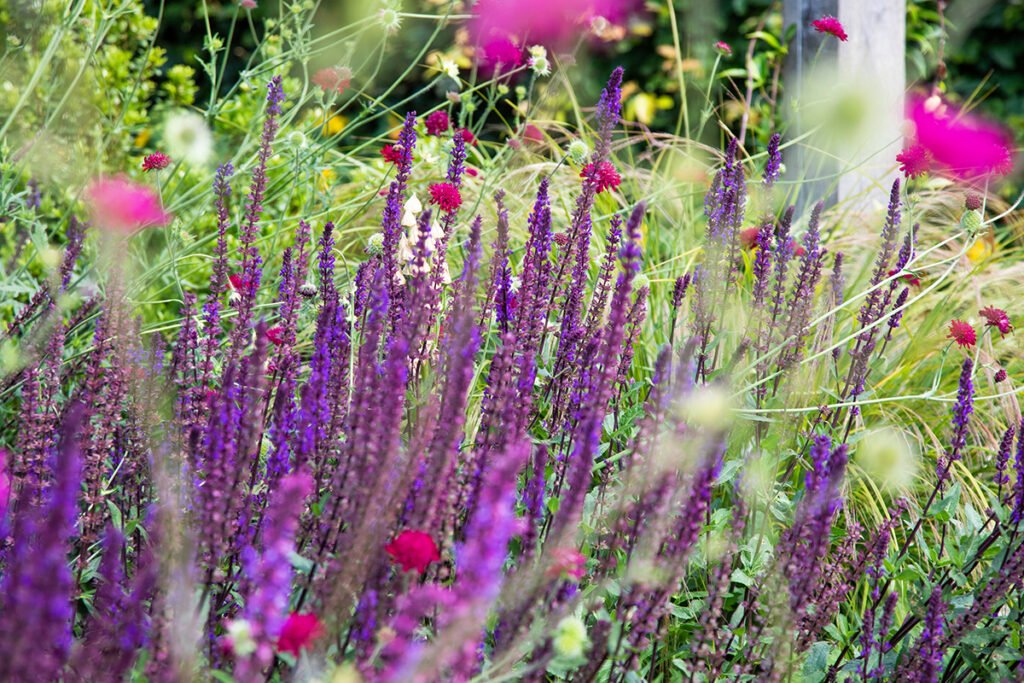
A single, closely mown species is high-maintenance almost by definition. It has one strategy for coping with weather, and when that strategy runs out, the whole lawn browns off at once. A more species-rich lawn, grass mixed with clover, self-heal, daisies and other low, tough little plants, behaves quite differently. Different plants root at different depths and cope with dry spells in different ways, so the lawn as a whole tends to stay greener for longer and recovers faster once rain returns, rather than turning uniformly brown overnight.
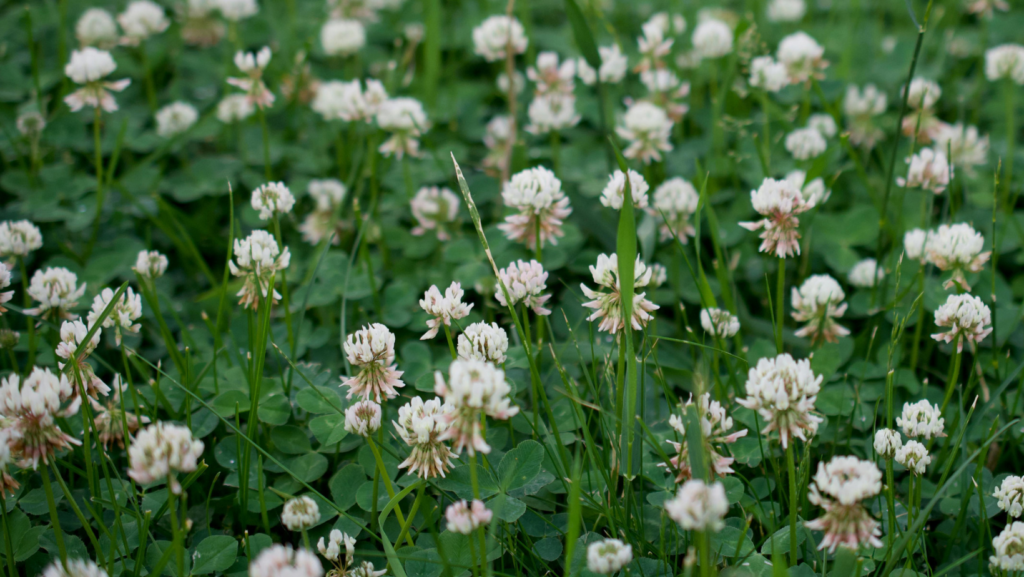
Clover in particular fixes its own nitrogen from the air, stays green through drought without irrigation, and copes perfectly well with children and pets running across it, which is why increasing numbers of gardens, including some of the country’s grandest historic ones, have started welcoming it back into the lawn rather than weeding it out.
TIP: Allow clover and daisies to come through your lawn instead of weeding them out.
3. Give it Proper Care
Rethinking a lawn isn’t only about mowing less or growing less grass. The lawn you keep copes far better with drought and heavy rain if you follow a few basic principles:
Aerate once or twice a year. Hollow-tine aeration relieves compaction, so air, water and nutrients reach the roots. Where water sits on the surface, aeration helps it drain, and a light topdressing of compost improves soil structure.
Scarify. Scarification is to a lawn what pruning is to a shrub: the grass responds by growing back denser and more vigorous. It removes the thatch of dead grass and debris that suffocates roots and prevents recovery.
Feed the soil, not just the grass. Organic feeds such as seaweed extract and kelp meal build healthy soil and deeper, sturdier roots. Exactly what copes best with the next dry spell.
Ditch the Chemicals. Glyphosate kills all plant life indiscriminately and disrupts the growth that connects plant roots underground. A soil treated with it is measurably less biologically active for months.
Overseed with new species. The grass species itself matters too. Most lawn seed mixes are dominated by perennial ryegrass, which establishes quickly but roots shallowly, browns fast in drought and needs regular feeding to perform. Fine fescues and bent are slower to establish but root far more deeply, need less input, stay greener in dry spells and recover faster when rain returns.
TIP: Aerate and overseed on the same weekend this autumn, so the new seed has the best chance to root.
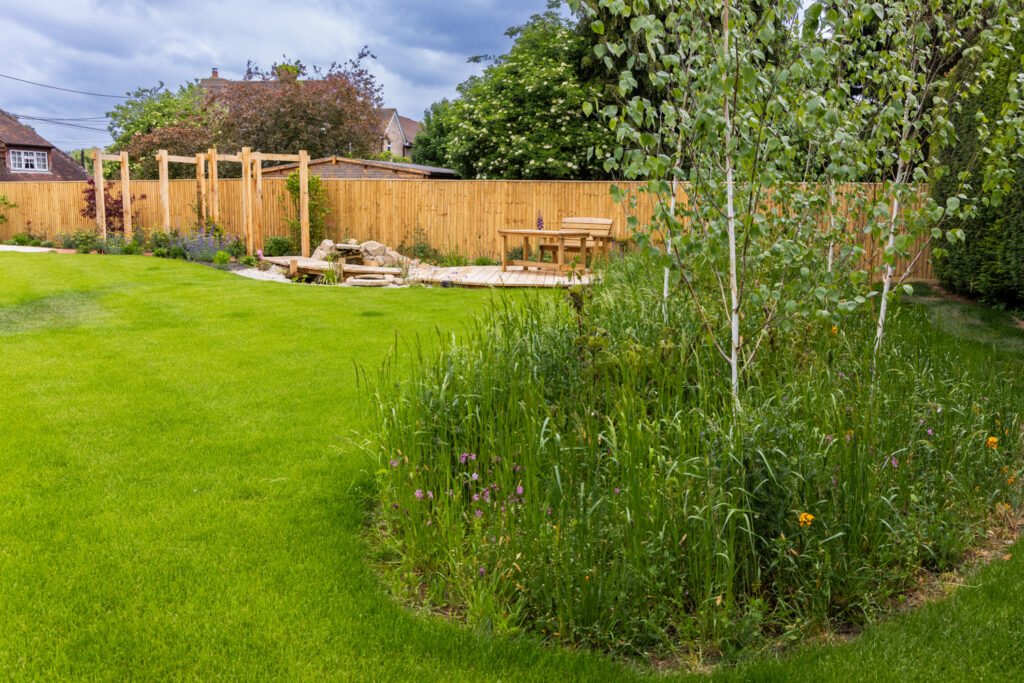
4. Let a Wildflower Patch Do What a Lawn Can’t
A border is one answer to too much lawn; a dedicated wildflower patch is another. A modest area, ideally in a sunnier spot with the topsoil skimmed off if it’s currently rich lawn, will outperform a much bigger area of ordinary grass for colour, pollinators and interest right through summer. A mown edge keeps it looking deliberate rather than abandoned.
A wildflower area still needs managing, not just leaving. The timing of two cuts a year is what keeps wildflowers winning the battle against coarse grass. Resist the urge to tidy in June or July, as that’s when the flowers and seeds are doing their most important work.
If grass is dominating, yellow rattle can help, as this native annual parasitises grass roots, weakening it naturally and opening space for wildflowers to establish, often within a season or two. Once the grass is suppressed, overseeding with a species-rich wildflower mix into the gaps completes the picture. Autumn is the ideal time for both these jobs, giving seed the cold spell it needs to germinate well.
TIP: You can start small. A modest strip in your sunniest spot, with a mown edge, is enough to see what comes up.
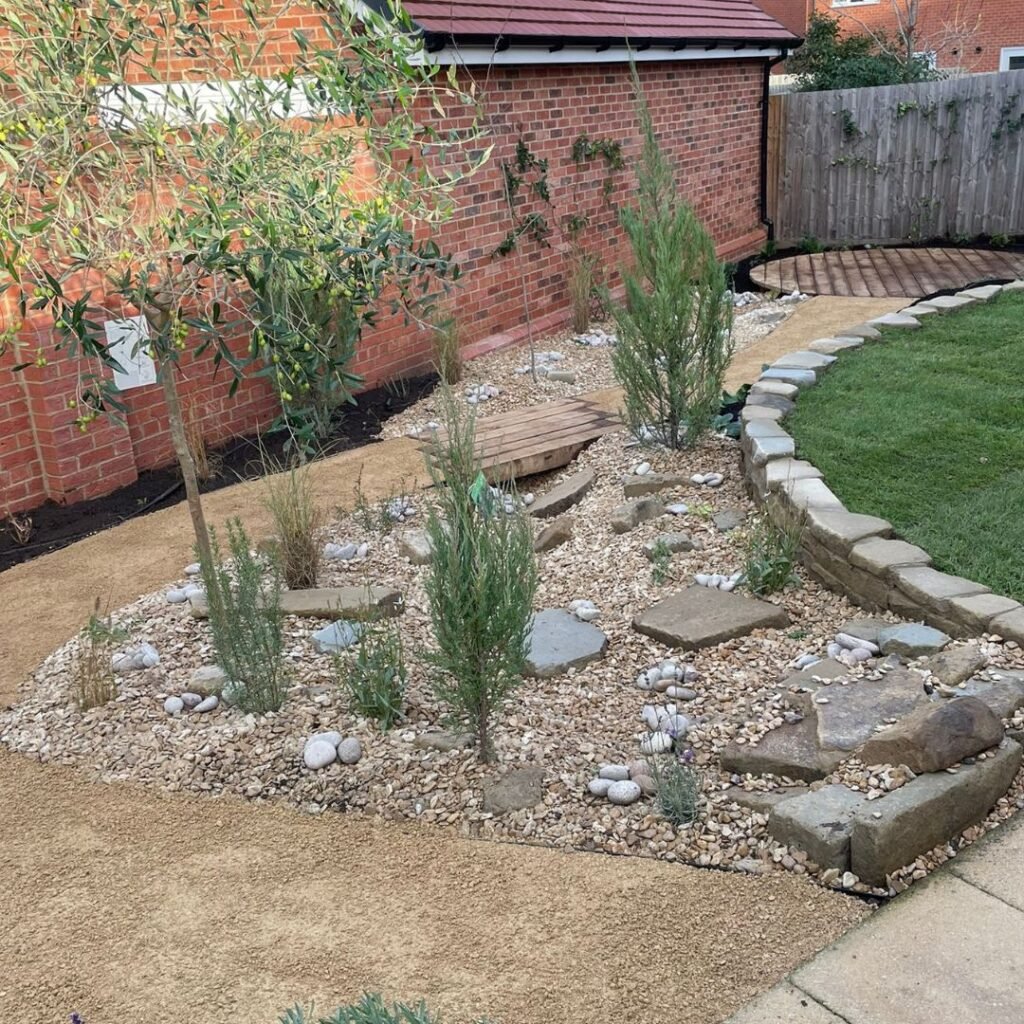
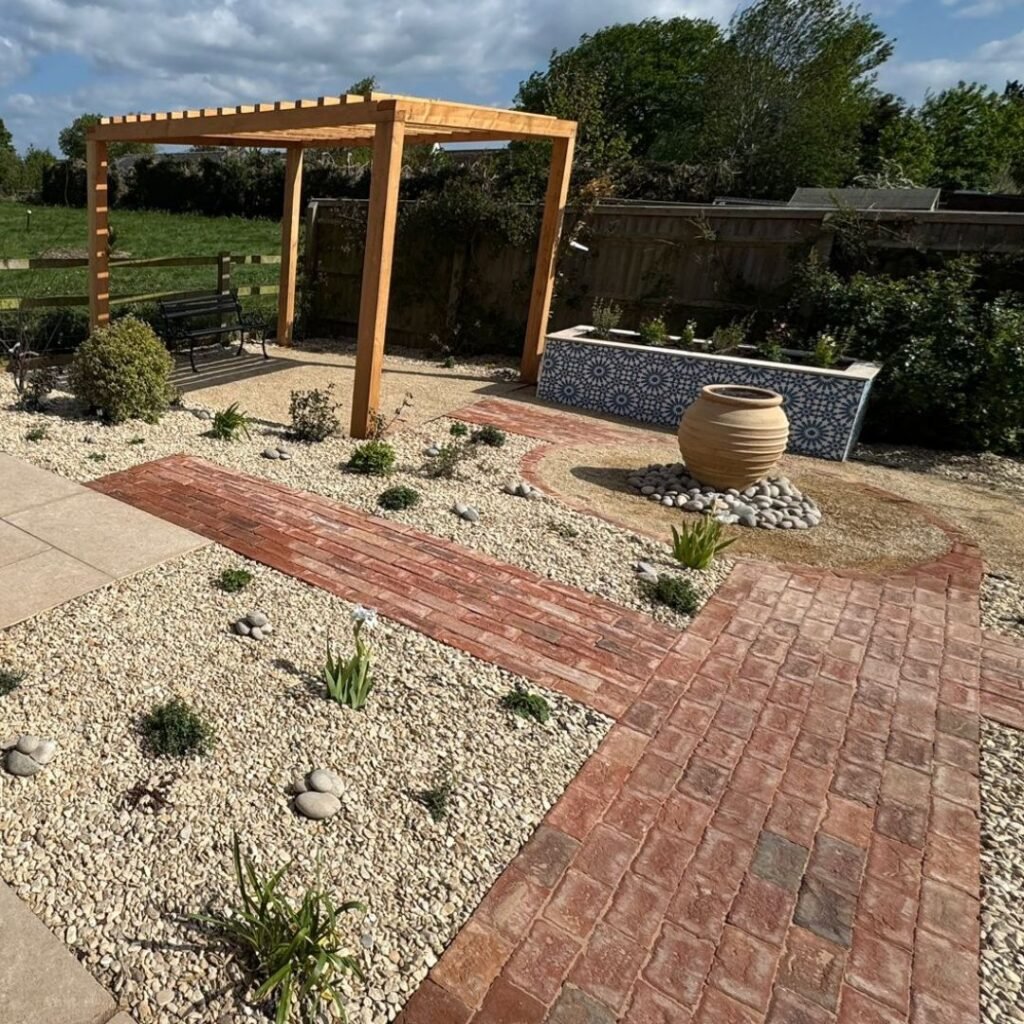
5. Try a Gravel or Dry Garden for the Thirstiest Corner
Most gardens have either one sunny, free-draining corner or a shady corner where grass has always struggled no matter what’s fed to it. Rather than fighting it, that can sometimes be the spot to stop growing lawn altogether. A gravel or dry garden with drought-tolerant plants like sedums, verbena, eryngium, lavender, nepeta and ornamental grasses through a mulch of gravel turns a lawn’s weakest point into a garden’s most resilient feature, needing minimal watering once established.
It doesn’t have to mean a corner treatment either. One of our clients wanted to replace her entire lawn, and we designed and created a Mediterranean-inspired garden: layers of lavender, nepeta, sedum and agapanthus, different textures and heights through the season, and the result is a garden that looks better in a dry August than it ever did with grass. You don’t have to have a lawn to have a beautifully designed outdoor space.
TIP: Try starting with the one corner where grass has never thrived, rather than the whole lawn.
6. Don’t Be Tempted by Plastic Artificial Grass
Which brings us to the option a brown lawn often tempts people towards: artificial turf. No watering, no mowing, always green in the photos. It’s easy to see the appeal after a hard summer. But swapping a living lawn for plastic trades a difficult few weeks for problems that don’t go away.
Synthetic turf absorbs and radiates heat rather than cooling itself the way living grass does, and can reach temperatures hot enough to burn bare feet, paws and small hands on a sunny day, which is a real hazard for a family garden. It’s also, fundamentally, plastic: it slowly sheds microplastic fragments into drains, soil and streams over its lifetime, and the barrier beneath it seals off the soil so nothing, no worms, no insects, none of the small life a real garden supports, can live underneath it. Most artificial lawns last only eight to ten years before the worn turf, difficult and costly to recycle, ends up in landfill.
It’s telling that the Royal Horticultural Society has banned artificial grass from its own flagship flower shows over exactly these concerns. A living lawn that browns off for a few weeks and comes back is a far smaller, far more temporary trade-off than a hot, polluting, plastic one that sits there for a decade.
TIP: If a brown lawn has you tempted, wait for the autumn rain before deciding. Most lawns green up again within a few weeks.
7. Experiment, and See What Works for You
You don’t need to redesign everything at once. Try a clover patch before committing to a whole meadow. Watch what thrives in the gardens on your street, and note what does well on your own soil and aspect before buying a full seed mix. The gardens that work best are rarely planned perfectly from the start; they’re built up through a few seasons of noticing what the garden is actually telling you.
TIP: Take a photo of your lawn each month. It’s the easiest way to see what’s changing and what thrives.
Autumn Is The Time To Act
If any of the above has you rethinking your lawn, Autumn is the season that matters most. The soil is still warm, grass and wildflowers are putting energy into roots, and the conditions are right for renovation, overseeding and new wildflower establishment in a way that spring simply can’t match.
Whether it’s lawn renovation, wildflower meadow creation, garden development or redrawing the boundary between grass and planting, this is the work our Care and Development team do in clients’ gardens through every Autumn.
If you’re ready to rethink your lawn and need some help, get in touch.