Britain’s pollinators are extraordinary
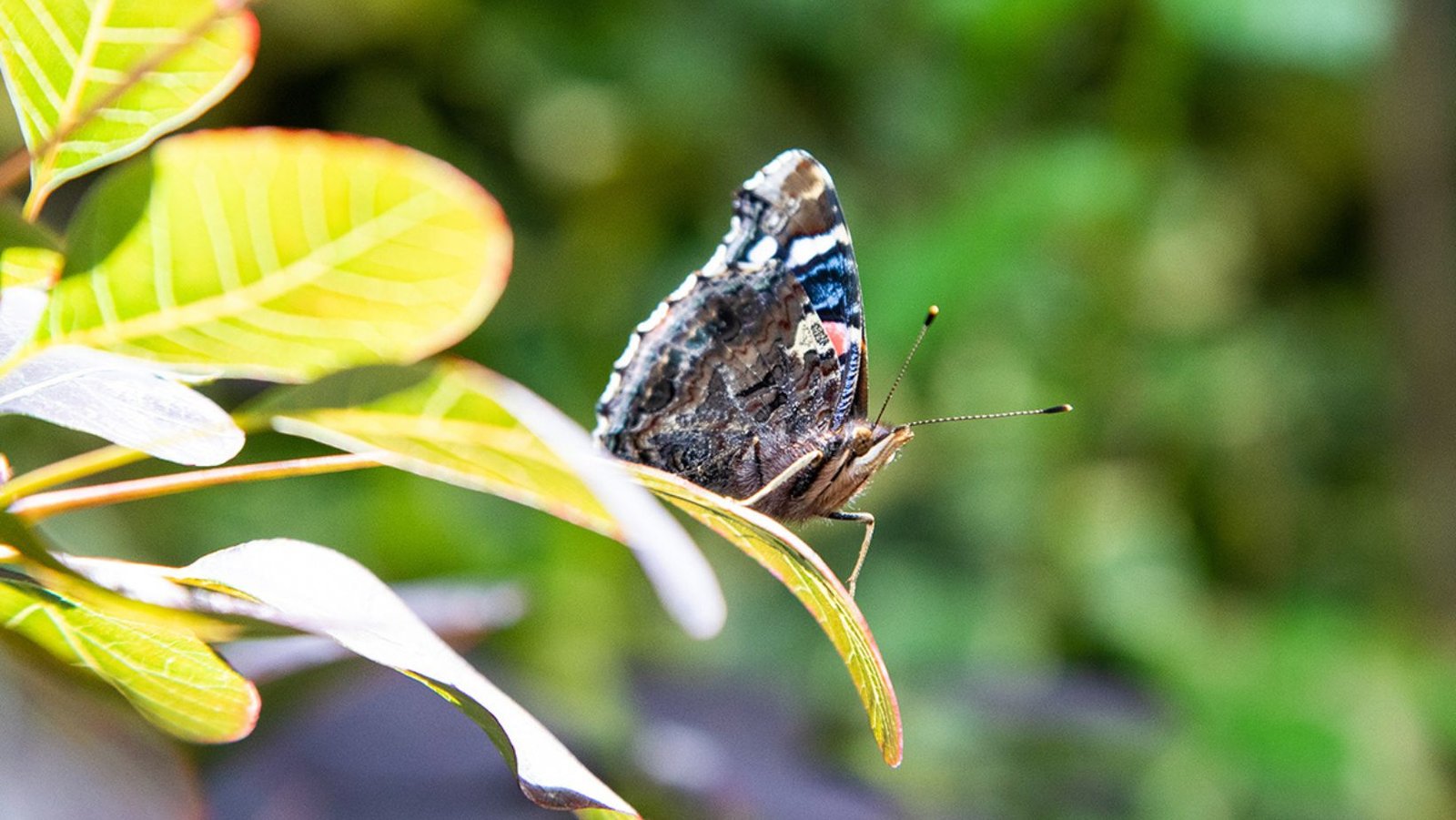
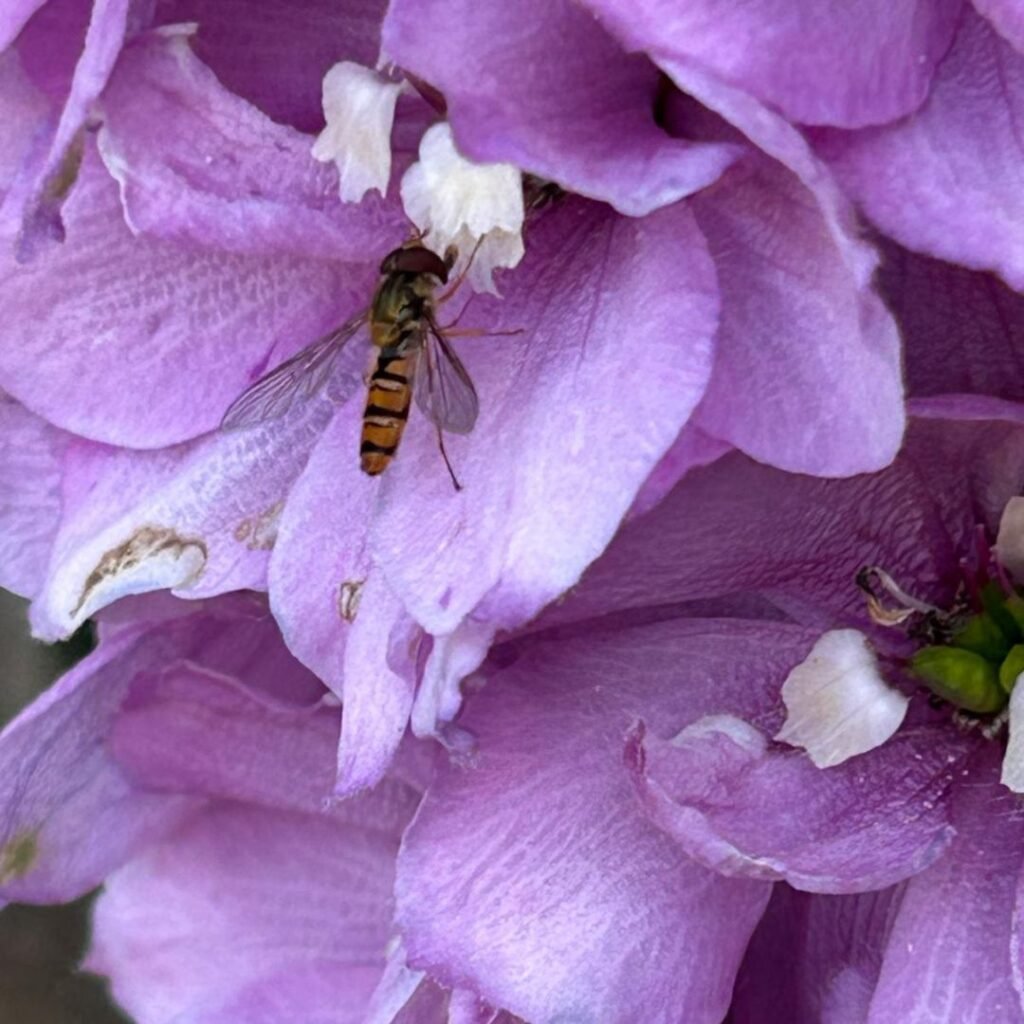
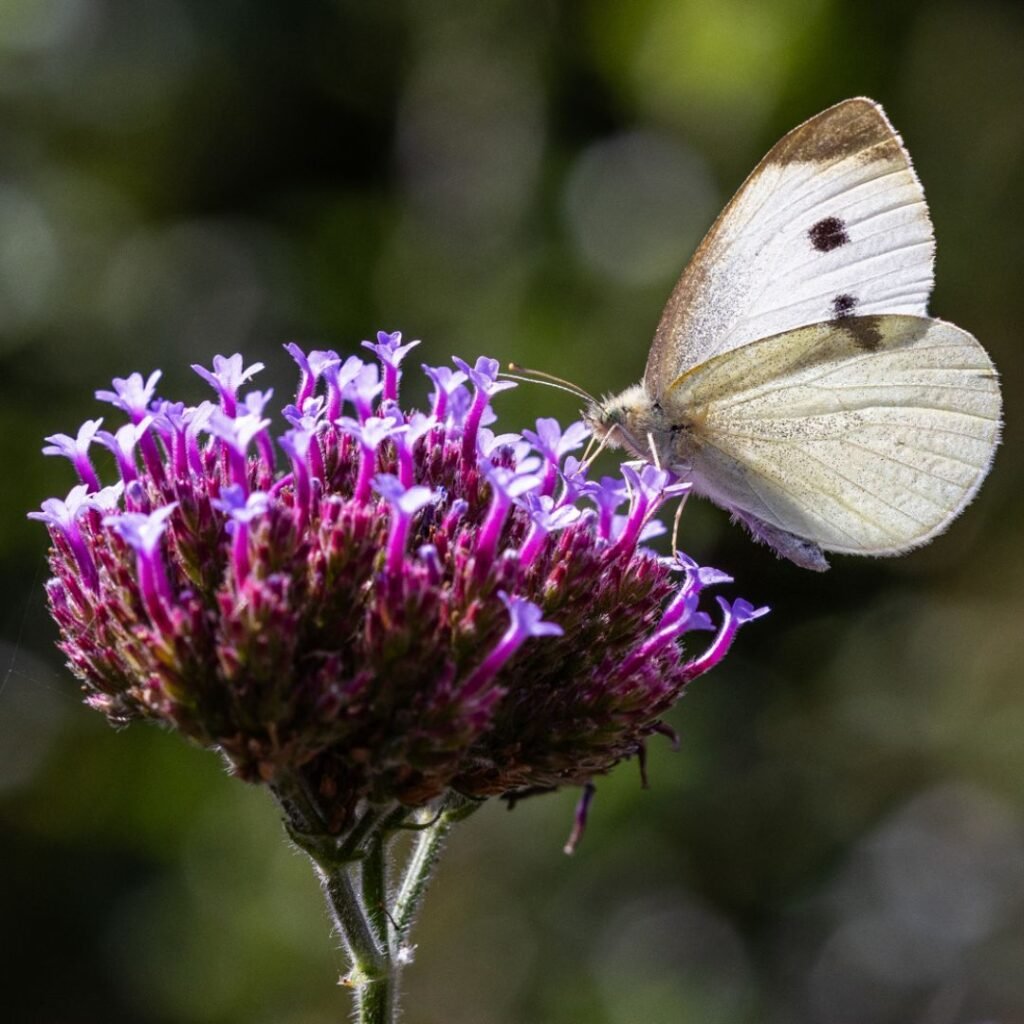
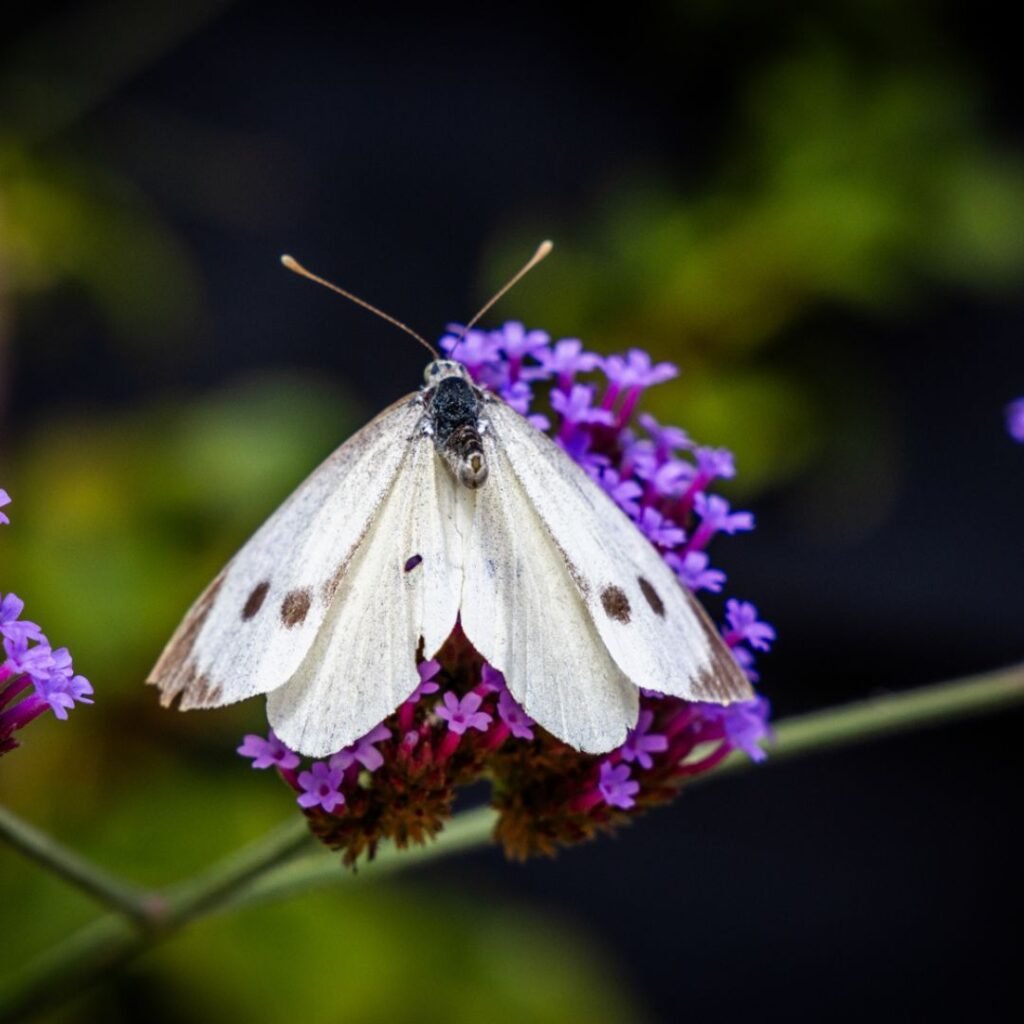
Did you know that Britain is home to around 270 species of bee, 60 species of butterfly, 900 species of moth, and 270 species of hoverfly? Alongside this extraordinary range of creatures are hundreds of beetles, wasps and other insects that quietly move pollen from flower to flower. Some ecologists estimate as many as 6,000 insect species in Britain may play a role in pollination.
Gardens matter to pollinators
Research published in 2020 found that even a small garden can support more than 50 pollinator species. Sadly many of these species are under pressure. Moth populations have fallen by around a third since the 1960s. Several hoverfly groups are in long-term decline. The reasons are complex, but one of the most hopeful findings in recent ecological research is this: gardens genuinely matter.
Has your garden lost some of its buzz?
Despite this apparent wealth of wildlife, many of us don’t see as many butterlflies, dragon flies, bees and other pollinators as we used to. We want our gardens to feel alive again; not just beautiful planting, but bees moving through the borders, butterflies drifting across the lawn, the quiet hum of life on a warm Summer afternoon.
If you spend any time reading gardening advice about pollinators, you might think it is all about plants and flowers. From ‘The 10 best flowers for bees’ to ‘How to plant a pollinator-friendly border’, plants and flowers often take centre stage.
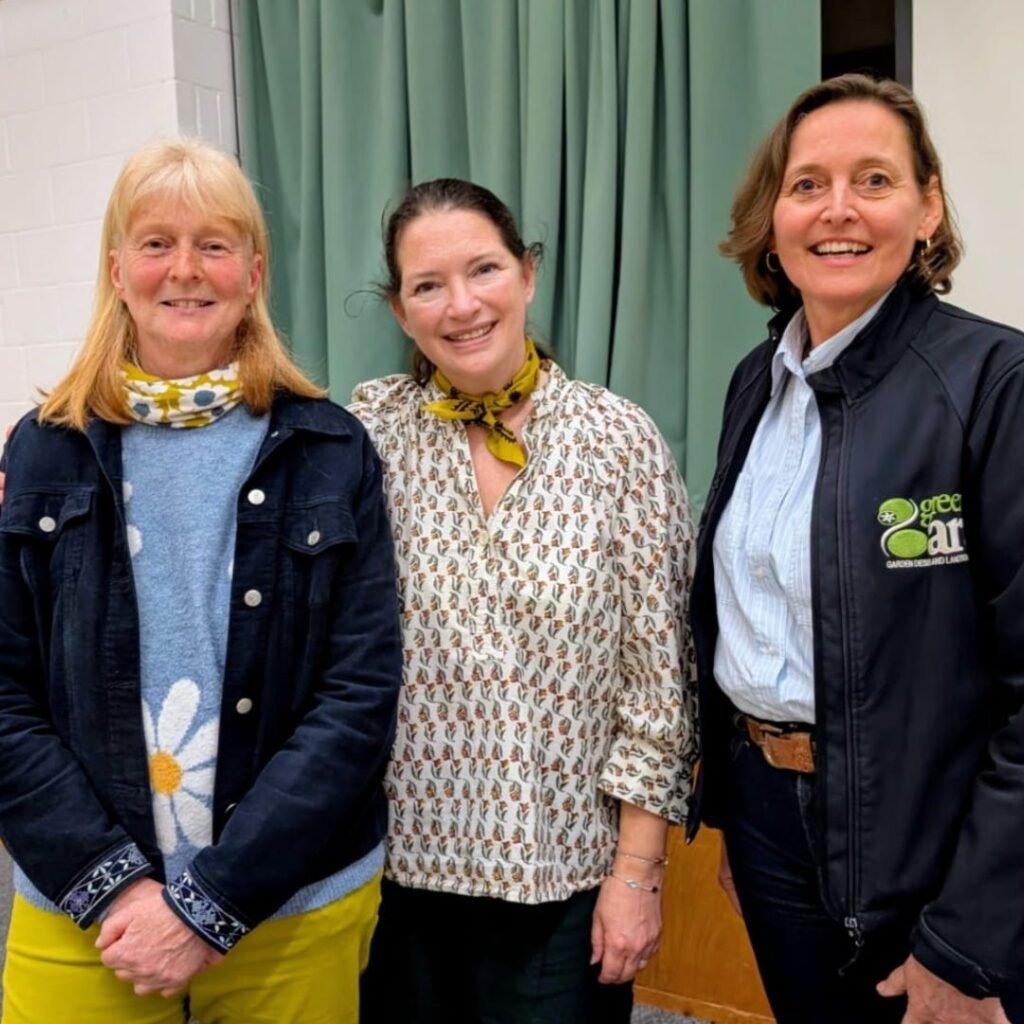
We recently met Rachel de Thame when she came to talk to the Benson Gardening Club about choosing flowers for pollinators in your garden.
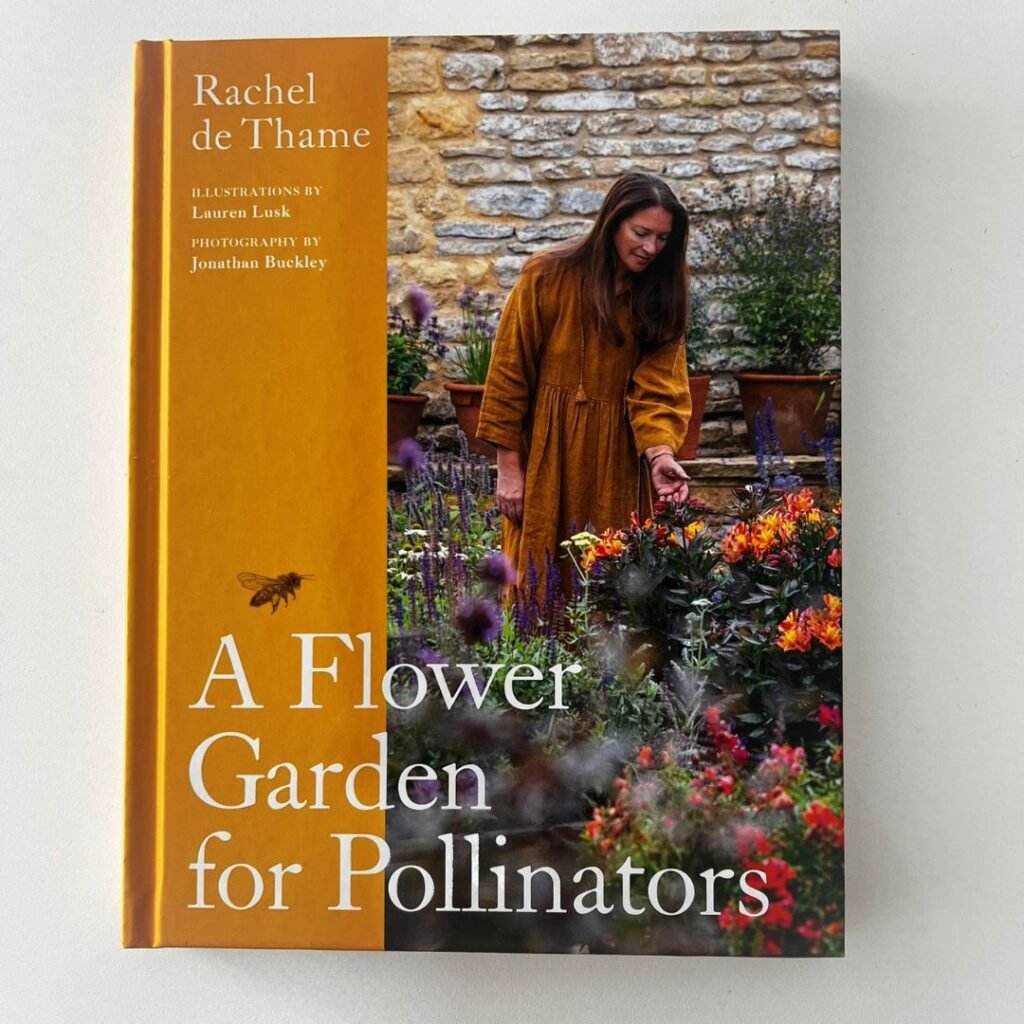
Her book ‘A Flower Garden for Pollinators’ is a wonderful guide to planting a pollinator-friendly garden throughout the seasons and her talk really brought it to life.
But whilst important for pollinators, flowers are just part of the picture.
Pollinators need more than just flowers
At the Wildlife Gardening Symposium earlier this year, ecological scientist and pollinator expert Professor Jeff Ollerton delivered a talk about pollinators needing far more than just flowers. Their needs can be seen as a simple triangle with three points: food, reproduction, and supplements.
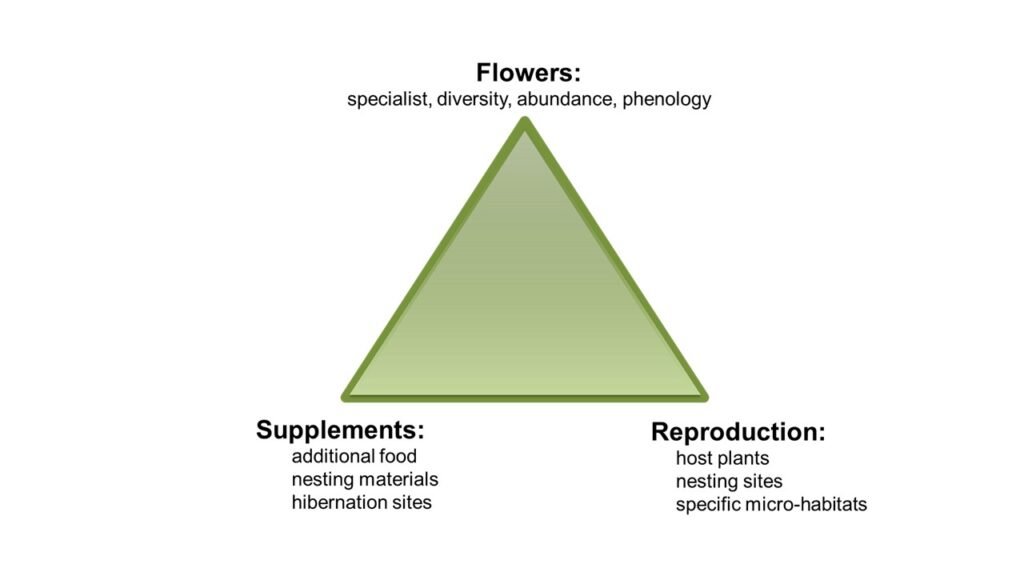
Food for pollinators
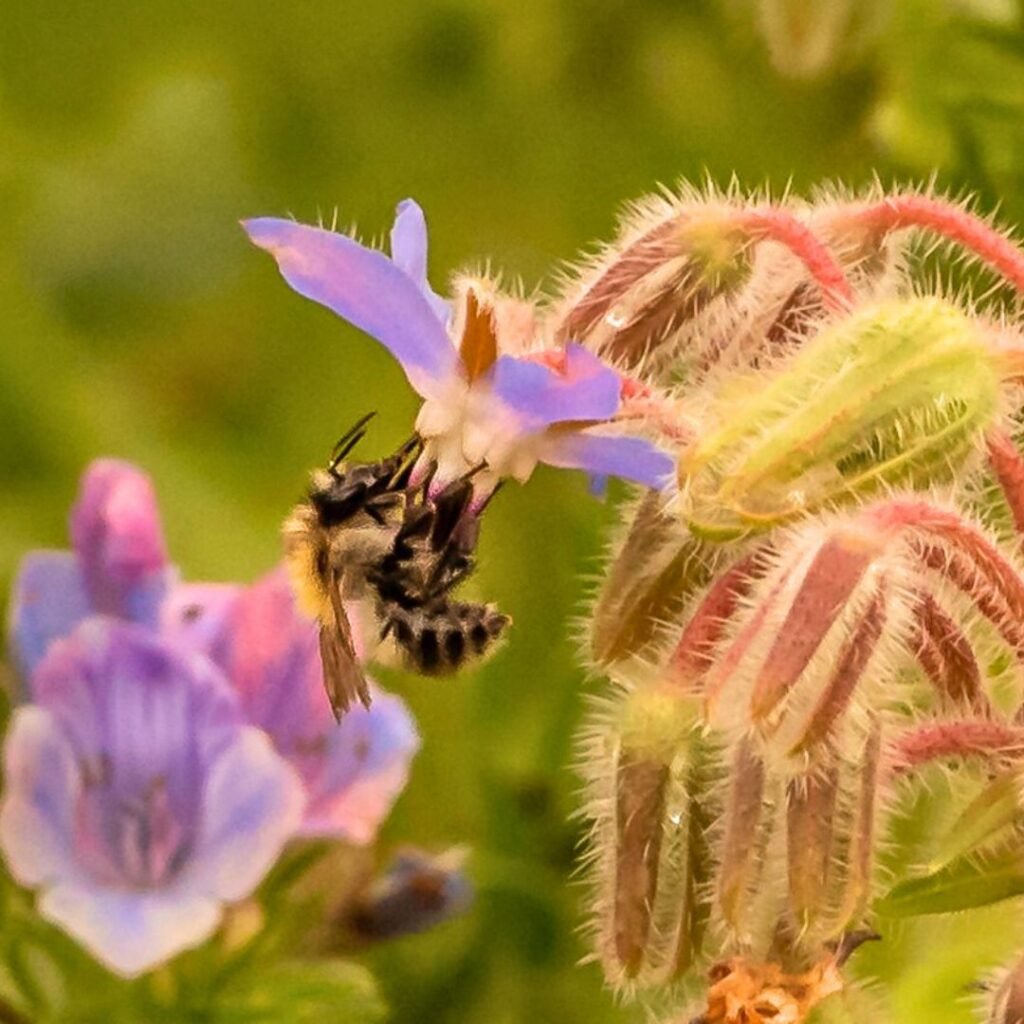
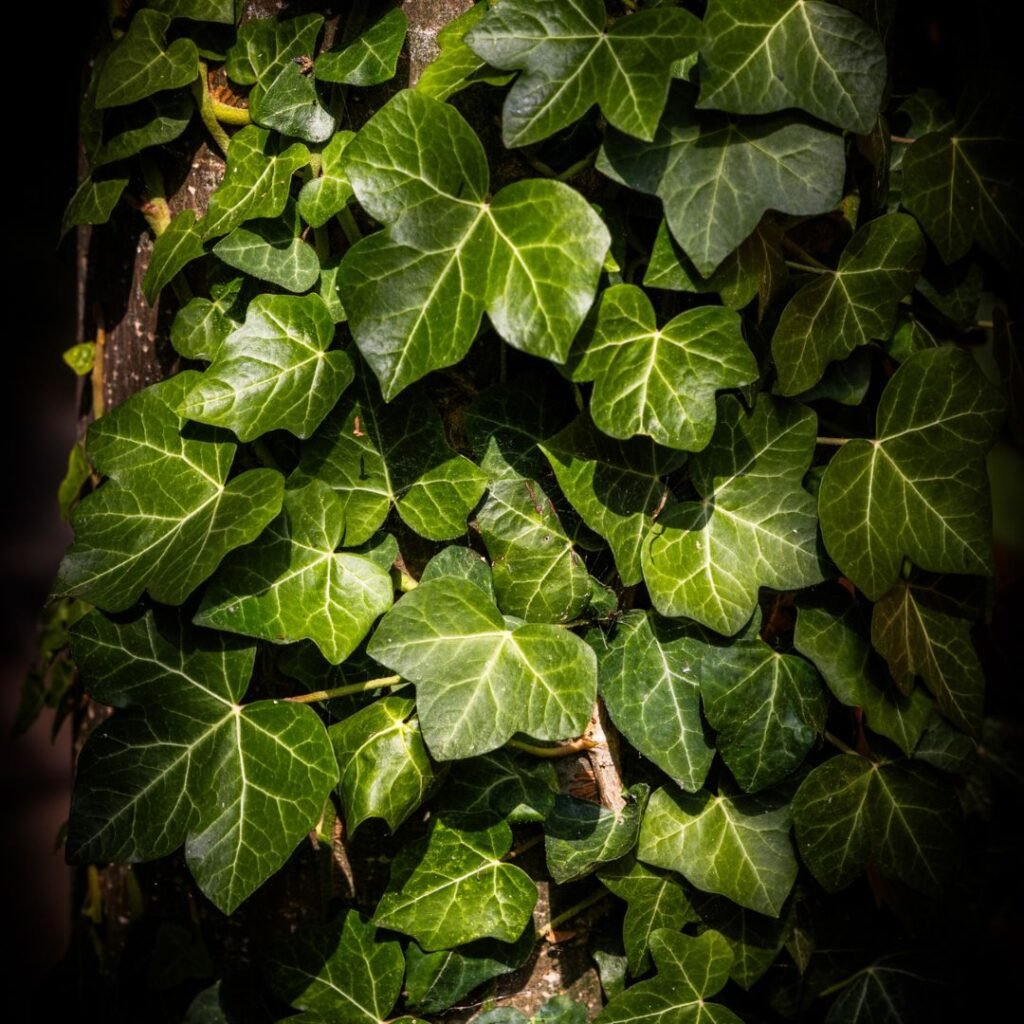
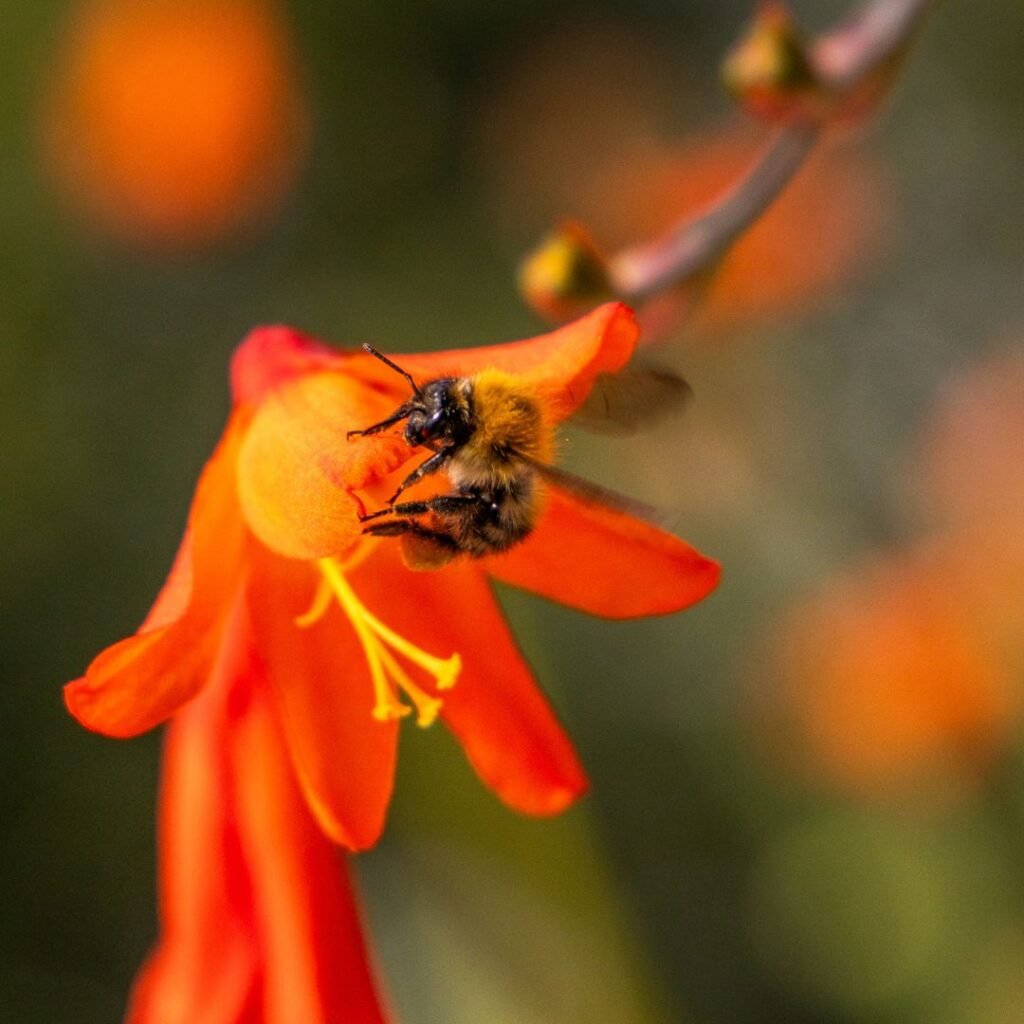
Most gardeners know that pollinators need nectar and pollen from a wide variety of flowering plants, ideally across the whole season. Ideally a garden should offer pollinators food from February through to November. Early blossom, Summer perennials, and late flowers like ivy and asters, support far more wildlife than one that peaks briefly in midsummer. Some species are very particular: the six-spot burnet moth, for instance, relies heavily on birds-foot trefoil, which only flowers in mid-summer. Others, like the common ‘long-tongued’ carder bee prefers flowers with tubular florets, such as heather, clover and lavender so has plenty of food from June to September.
Supporting reproduction
This is where many gardens fall short, not through any fault of their owners, but simply through lack of knowledge. Did you know that most of Britain’s bee species are solitary, and actually nest in the ground? Others rely on hollow stems, decaying wood, tussocky grass, old trees, or damp soil. A garden that includes long grass, log piles, undisturbed corners, and varied structure gives insects the places they need to reproduce and complete their life cycles, not just to visit.
Supplements for shelter
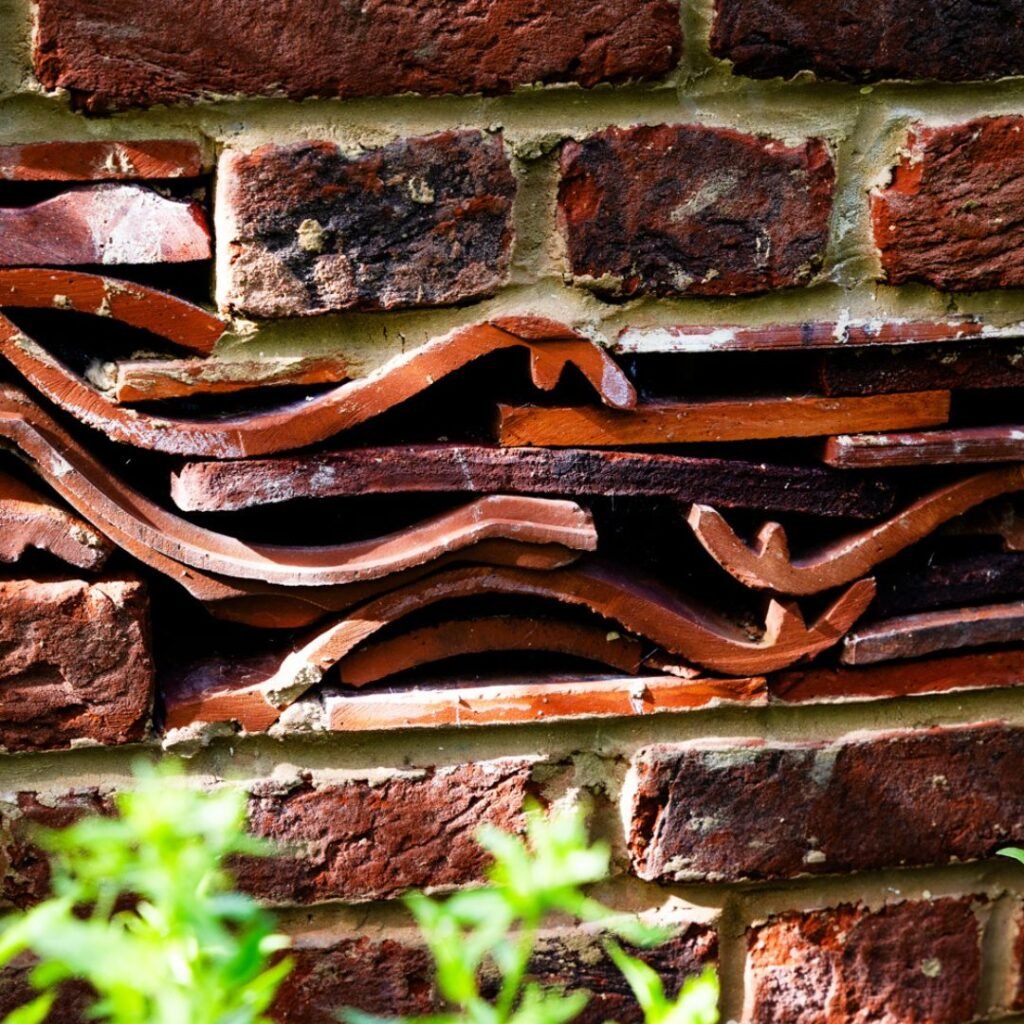
Alongside places to reproduce, pollinators need reliable shelter in order to rest through cold nights and survive the winter. Some spend the Winter within a cocoon to emerge as early in the year as possible to take advantage of early flowering plants. Others huddle in clusters – shivering to stay warm. Piles of stones, dense shrubs, hollow stems left standing, and leaf litter all provide vital shelter. Sometimes the single most effective thing a gardener can do is leaving a garden a little less tidy.
The importance of flowering shrubs and trees for pollinators
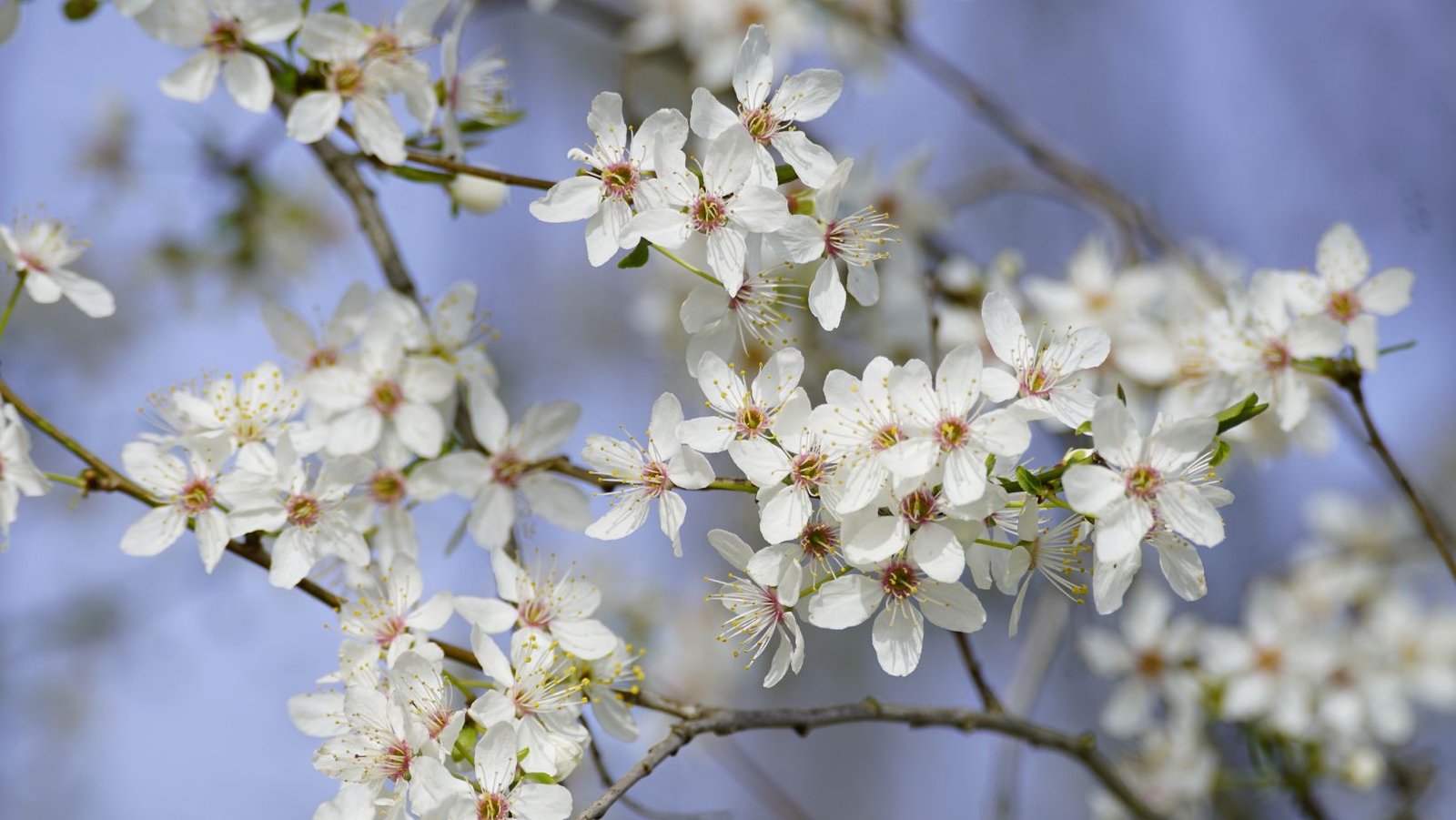
Wildflower meadows are rightly having a moment in the spotlight, and we encourage all our clients to include them where possible. But Professor Ollerton’s strong recommendation is to also prioritise flowering trees and shrubs.
Consider what a native hedgerow offers across the year: blackthorn in early spring when queen bumblebees are first emerging. Hawthorn buzzing with insects from April. Apple blossom alive with bees in May. Ivy providing a vital late-season larder well into November. A well-chosen mix of native and naturalised woody species can provide flowers for ten months of the year, while also creating the structure, shelter, and nesting habitat that smaller plants simply cannot.
This is why a mature garden with trees, established shrubs, and hedging so often feels more alive than a newer one. The structure is already doing much of the work.
7 top tips to attract pollinators
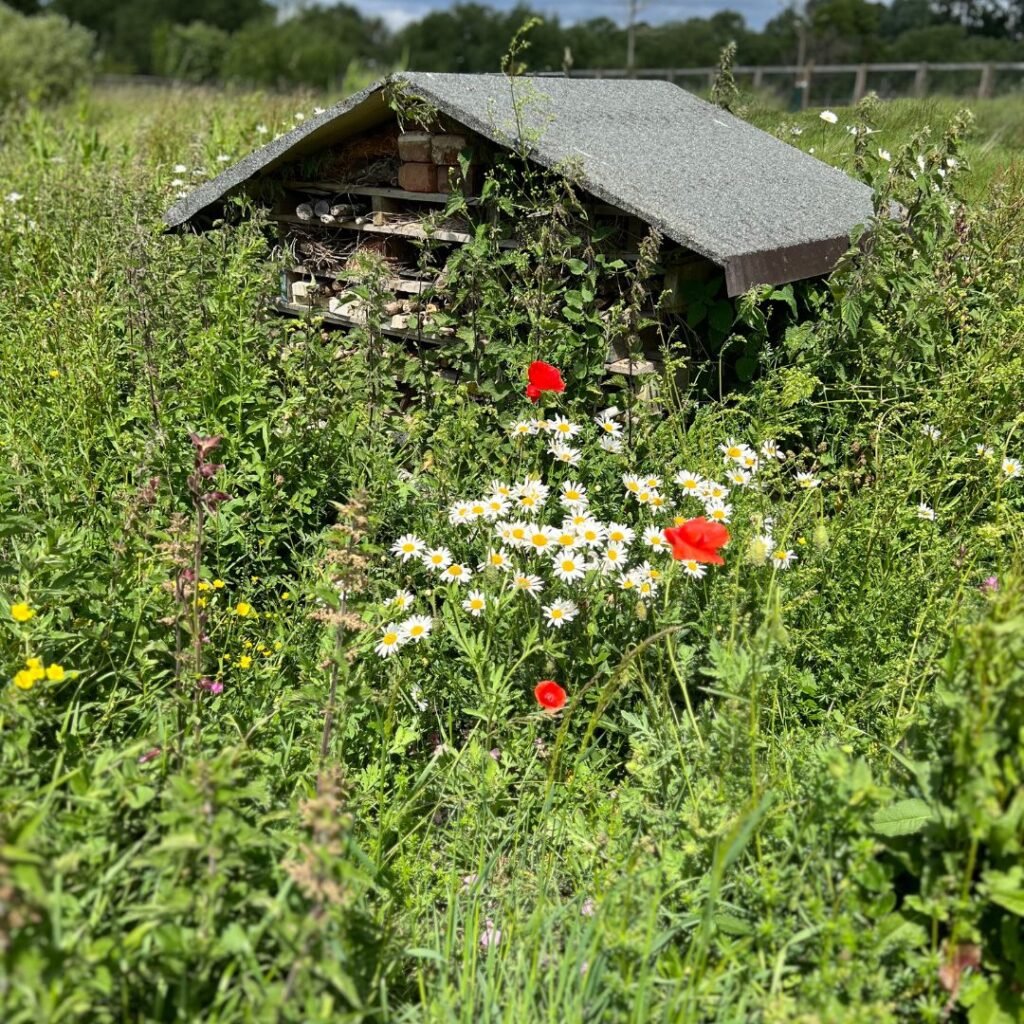
Bee and bug hotels have become enormously popular, and they do support certain species. However, on their own, without other connected habitats, their impact will be limited. Far more valuable is a garden that includes varied ground conditions, rough grass, and bare earth alongside its flowering borders.
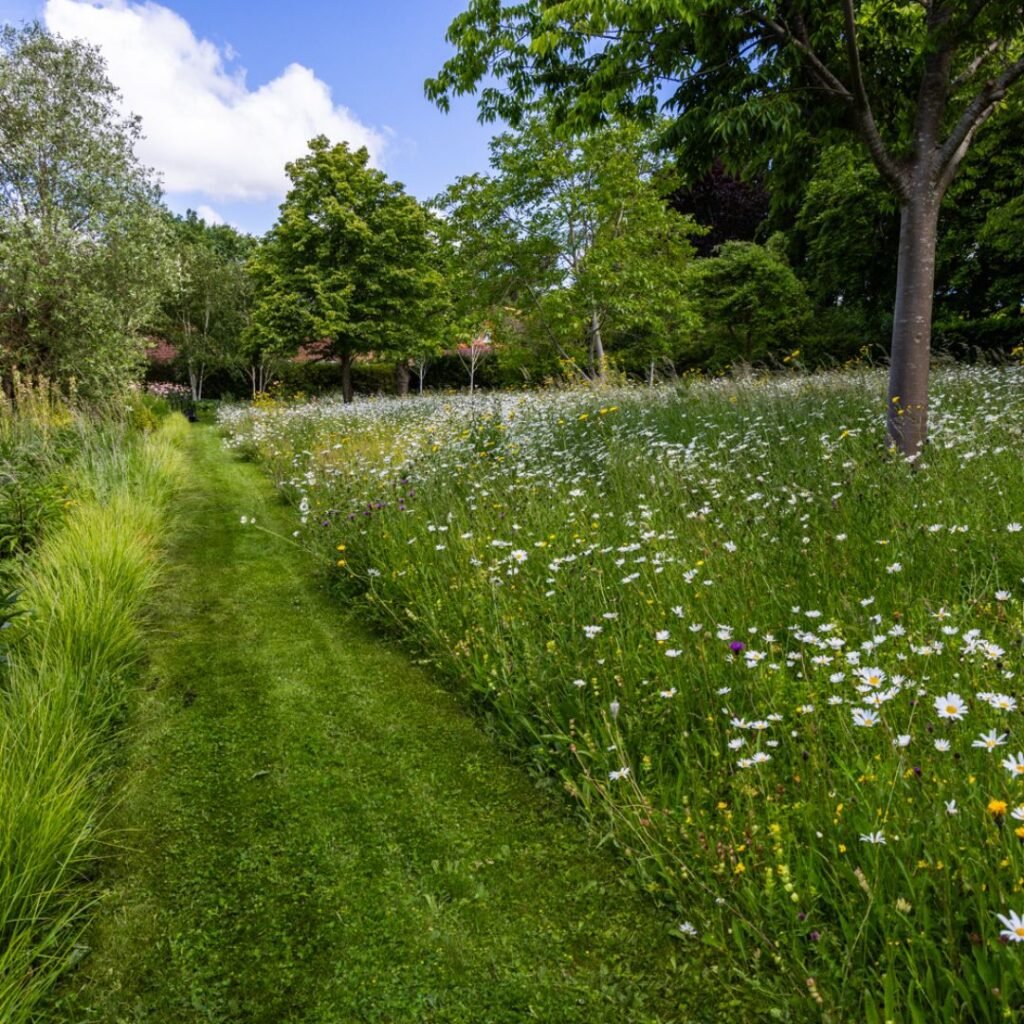
Similarly, No Mow May has raised welcome awareness, but Professor Ollerton suggests going further with what he calls ‘Mindful Mow May’: varying the timing of mowing in different areas each year, so that different parts of the lawn are cut on rotation. Short grass can actually be fine for some pollinators if it’s adjacent to flowering areas, what matters is creating a mosaic of habitats rather than a uniform approach.
1. Plant for the whole season
Keep flowers coming from February through to November. Deadhead regularly to extend flowering, and choose a variety of flower shapes and sizes so different species can access them. Avoid over-bred double flowers as pollinators often can’t get into them.
2. Prioritise trees and shrubs
Flowering woody species such as hawthorn, blackthorn, apple, willow, ivy offer food and habitat together. A well-chosen hedge or tree can provide ten months of flowering and support dozens of species year-round.
4. Leave some things alone
Hollow stems left standing over winter, leaf litter, log piles, and undisturbed corners give insects places to shelter, hibernate, and breed. A slightly less tidy garden is often a much more alive one.
5. Provide water
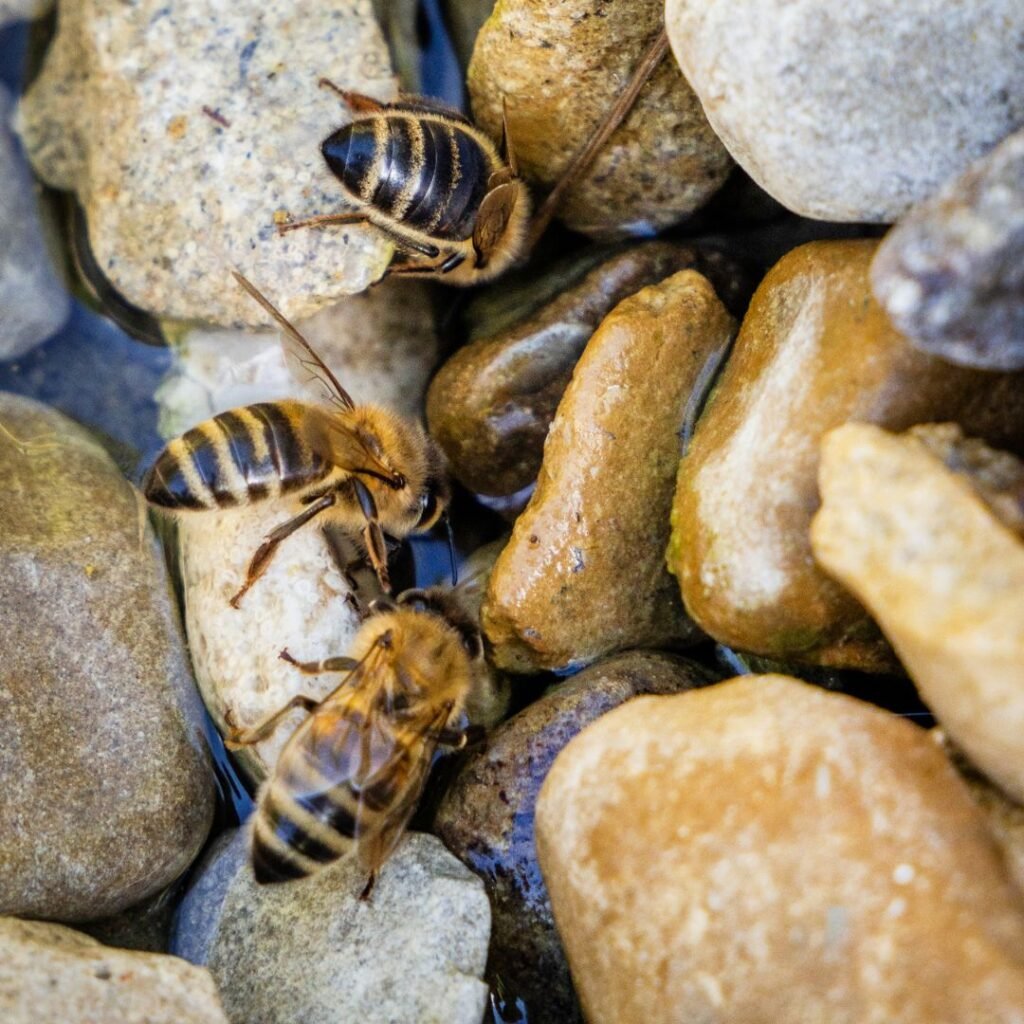
A shallow dish with a few stones breaking the surface is invaluable — insects need water to drink and to stay cool. Keep it topped up through dry spells.
6. Vary your mowing
Rather than one approach across the whole lawn, try mowing different areas at different times on a loose rotation. This creates the mosaic of habitats, some short, some longer, that supports the widest range of species.
7. Think about your wider landscape
Your garden connects with everything around it. Knowing what your neighbours grow, what’s in the local park, what trees line your street, all of this shapes what your garden can contribute to the network as a whole.
Curious how wildlife-friendly your garden is?
Many people are surprised by how small changes can make a big difference to the life in their garden.
If you’re curious about how well your own garden supports pollinators and wildlife, you can take our Wildlife Friendly Garden Score to see where it’s already thriving and get tips for how to support even more wildlife.