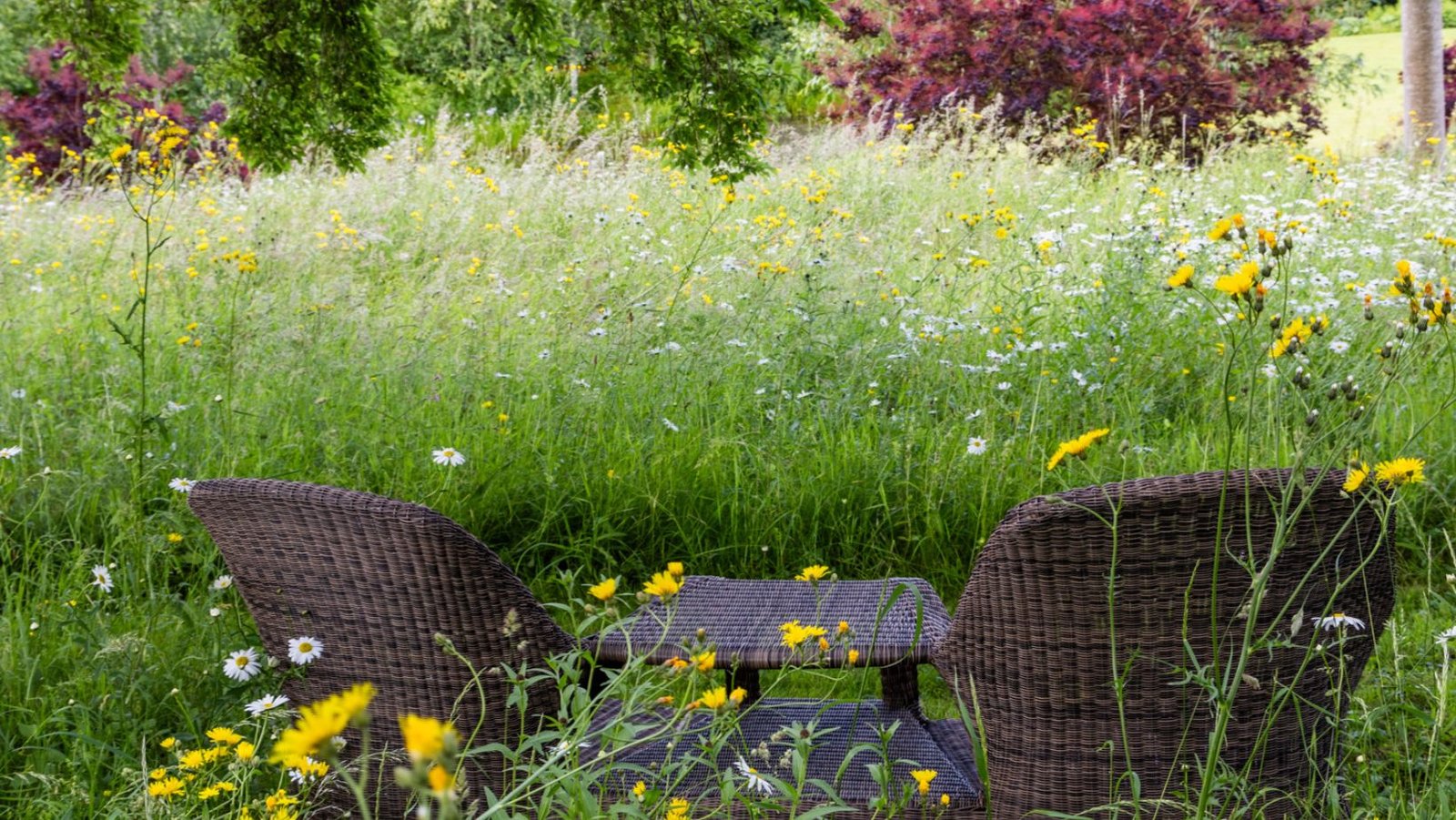
No Mow May is an awareness month initiated by charity Plantlife urging everyone to pack away the lawnmower, let wildflowers grow freely and help nature on your doorstep.
Letting the lawn grow wild can provide vital food needed by bees and butterflies and give wildlife the best start to summer. Plus, less mowing can save you effort, cost, reduce your carbon footprint and give you a deeper connection to nature.
This month invites people to be part of turning the tide on wildlife loss . Did you know that there is a reported loss of 97% of British flower-rich meadows since the 1930’s? By embracing the no mow movement for a month, these important flowers have the opportunity to thrive.
But letting all of your lawn grow wild for a month and then returning to old cutting habits doesn’t make much sense for the nature that lives on and around it.
This blog explores what No Mow May does well, where it falls short, and how to go further for wildlife all year round.
Why No Mow May Works
Did you know that
- Lawns cut every four weeks rather than every week produce ten times more nectar for bees (Plantlife, Every Flower Counts survey)
- 80% of participating lawns supported the equivalent of around 400 bees a day from flowers like dandelion, white clover and selfheal (Plantlife, Every Flower Counts Survey)
- UK gardens combined cover 959,800 hectares — over three times the size of the UK’s National Nature Reserves (RHS State of Gardening Report, 2025)
Our gardens play a significant role in feeding our pollinators. And our pollinators don’t live in one garden, so when we combine habitats in gardens we begin to create nectar rich highways. Corridors and stepping stones that make a difference. For example a bee’s foraging range spans several streets. A flowering garden three doors down is genuinely useful to the bee in your garden. That’s what ‘stepping stone’ actually means in practice.
No Mow May has already shifted how many of us think about our lawns , moving many away from the closely-cut, chemically maintained, monoculture lawn that became the British Standard in the 20th century. But we can do better.
The Questions No Mow May Raises
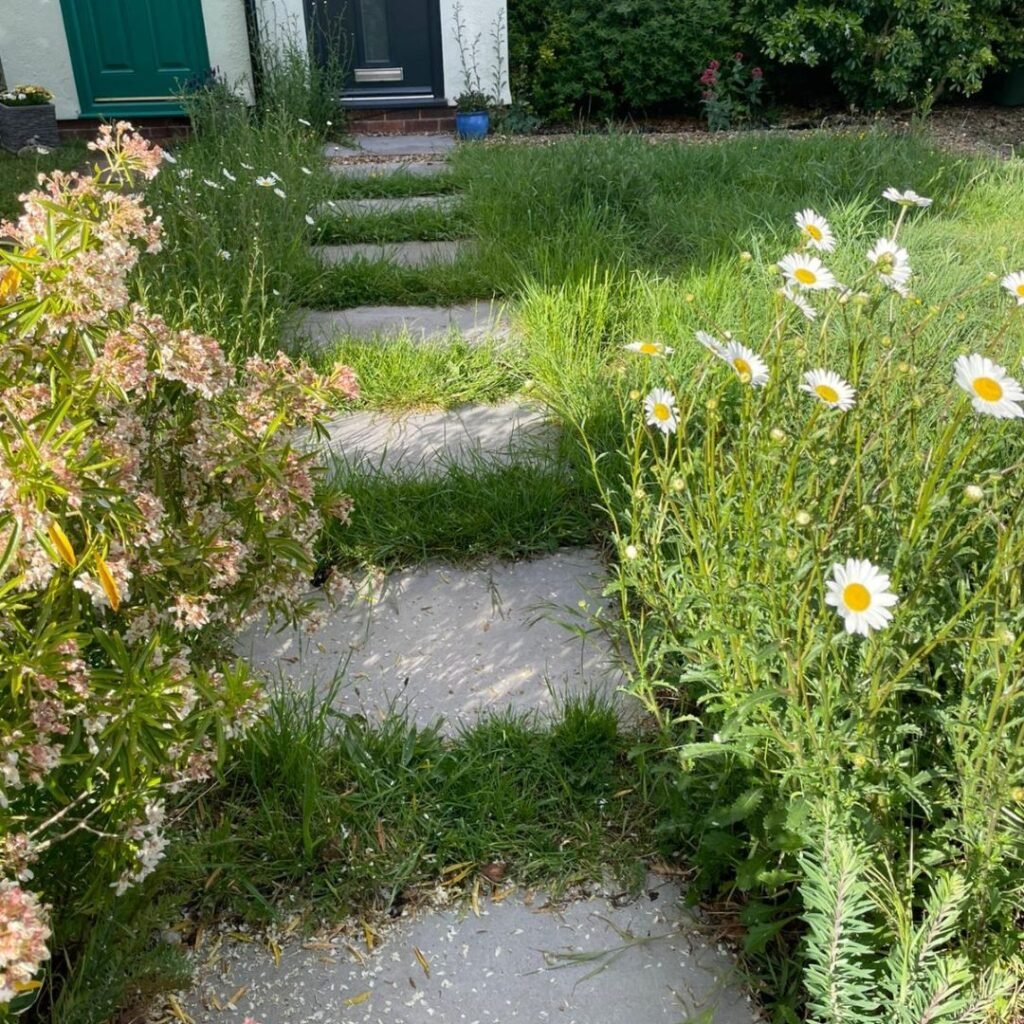
A wild lawn for just one month of the year is a good start but nature requires some stability. No Mow May is really an invitation to notice and watch what appears when the mower stays in the shed, and ask whether some of it might be worth keeping.
We all know that diversity makes a difference, and many lawns — after years of treatment and close mowing take time to respond. Letting your lawn grow long won’t always show results straight away. If the seed bank has lost its wildflowers, it may take a season or two as the habitat rebuilds and wildlife finds its way back.
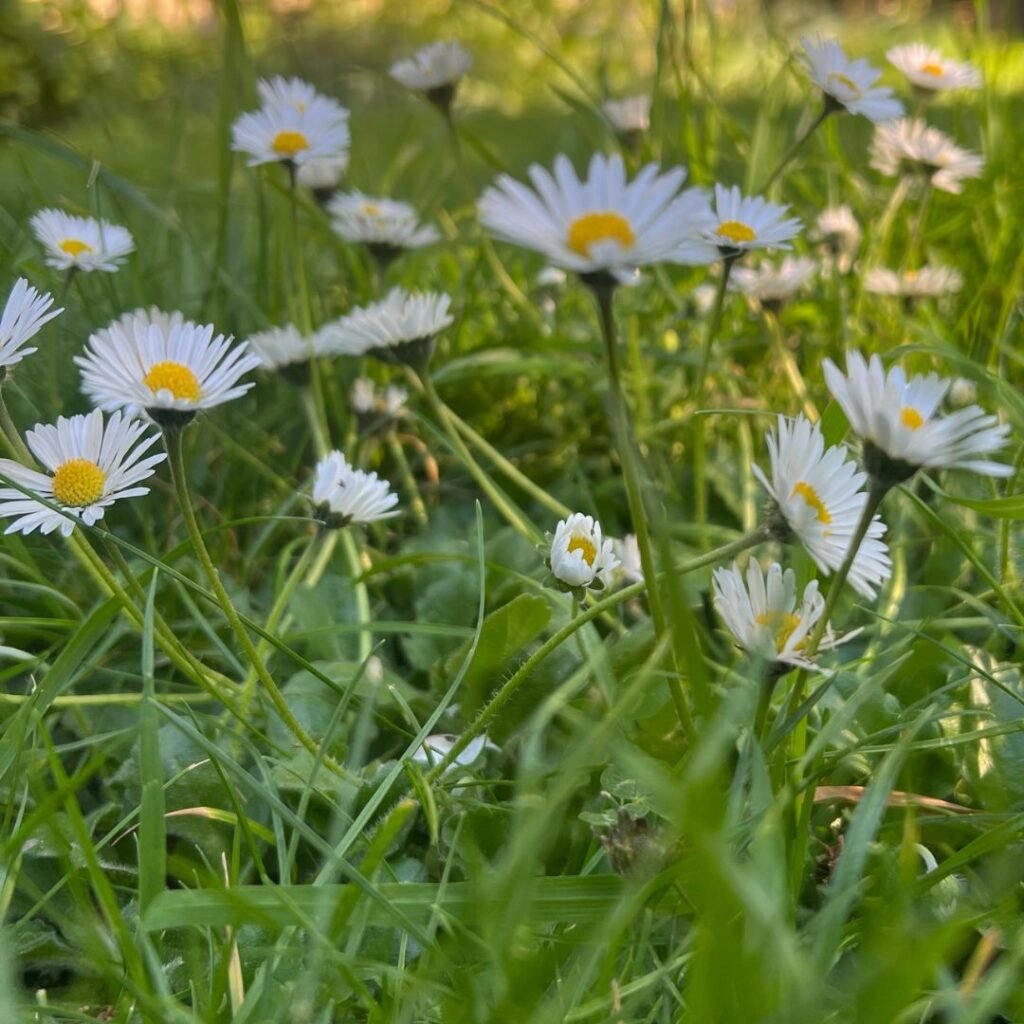
The good news is that contrast does as much as length to support wildlife. Short grass supports ground-nesting solitary bees and foraging birds. Long grass shelters hedgehogs, slow worms and moth caterpillars. Both are needed and both are valuable. In nature this contrast happens naturally through grazing and topography; in a garden we have to create it deliberately.
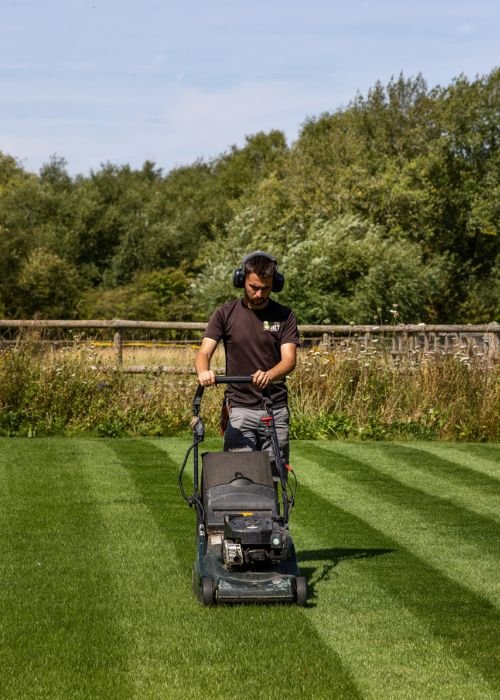
It’s important to acknowledge that No Mow May isn’t necessarily about giving up your stripey lawns, which we know many people love. A neat, well-kept lawn and a wildlife-friendly garden aren’t opposites. Organic fertilisers, a raised cutting height, and an unmown patch can sit comfortably alongside the garden you already have.
The New Cut – How to Approach Mowing your Lawn
Short Term, Easy Garden Wins
For many of us the lawn means more than we perhaps realise. It’s where children play, where we decompress after a long week, where a freshly cut stripe on a Sunday morning feels genuinely satisfying. That sense of order isn’t something to apologise for, a well-kept lawn can be good for the mind. But there’s another kind of satisfaction available too: watching a bee work the clover or daisies you decided not to cut, or spotting a hedgehog threading through the long grass you left at the edge. Both are worth having. If leaving the whole lawn long for months isn’t practical, here is where to start:
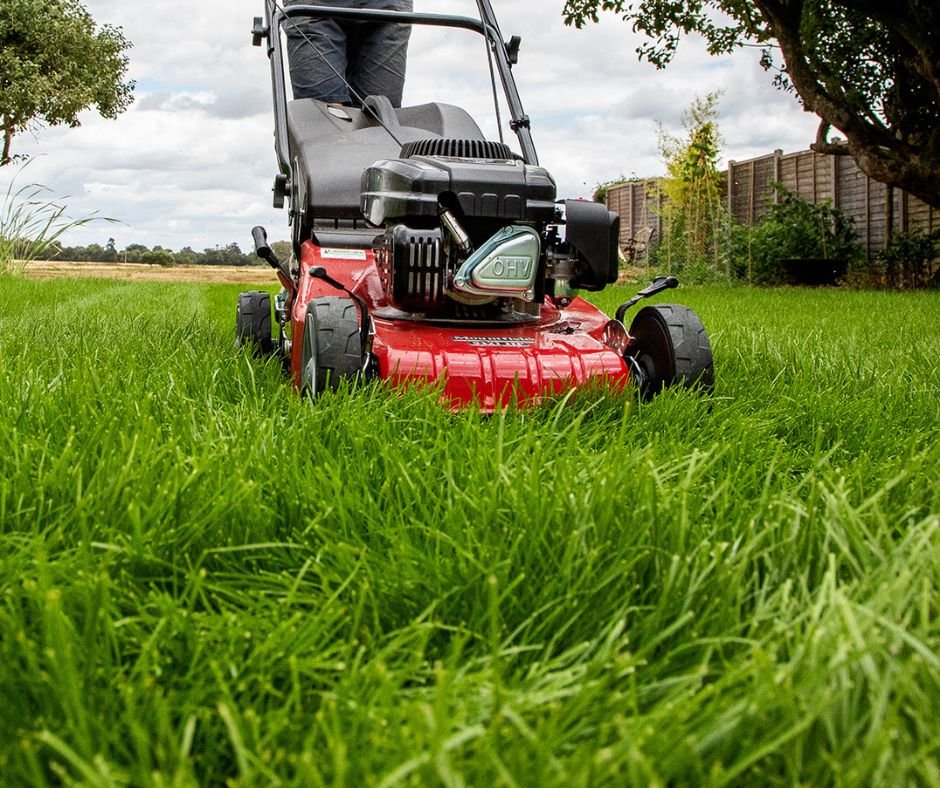
- Cutting less often. Try reducing to fortnightly rather than weekly; and monthly during peak flowering season in May and June.
- Raise your mowing height to 5-7cm. This will create a healthier grass that is more drought resistant and therefore supports far more invertebrate life.
Long Term Garden Goals
For the keener wildlife gardeners, you may already be doing the following:
- Actively introducing wildflowers through use of seed mixes or plant plugs. For example introducing yellow-rattle suppresses coarse grasses and opens up space for other wildflowers, transforming a monoculture lawn over a few seasons.
- Leaving a permanent wild patch year-round not just for May – these areas provide essential habitat, like bare ground for nesting solitary bees, stems provide shelter for overwintering invertebrates and seedheads that feed birds through the Winter.
- Year round slow mowing – applying the principles of No Mow May to the whole year, mowing less often, cutting higher and eliminating all chemicals to let the lawns natural balance re-establish.
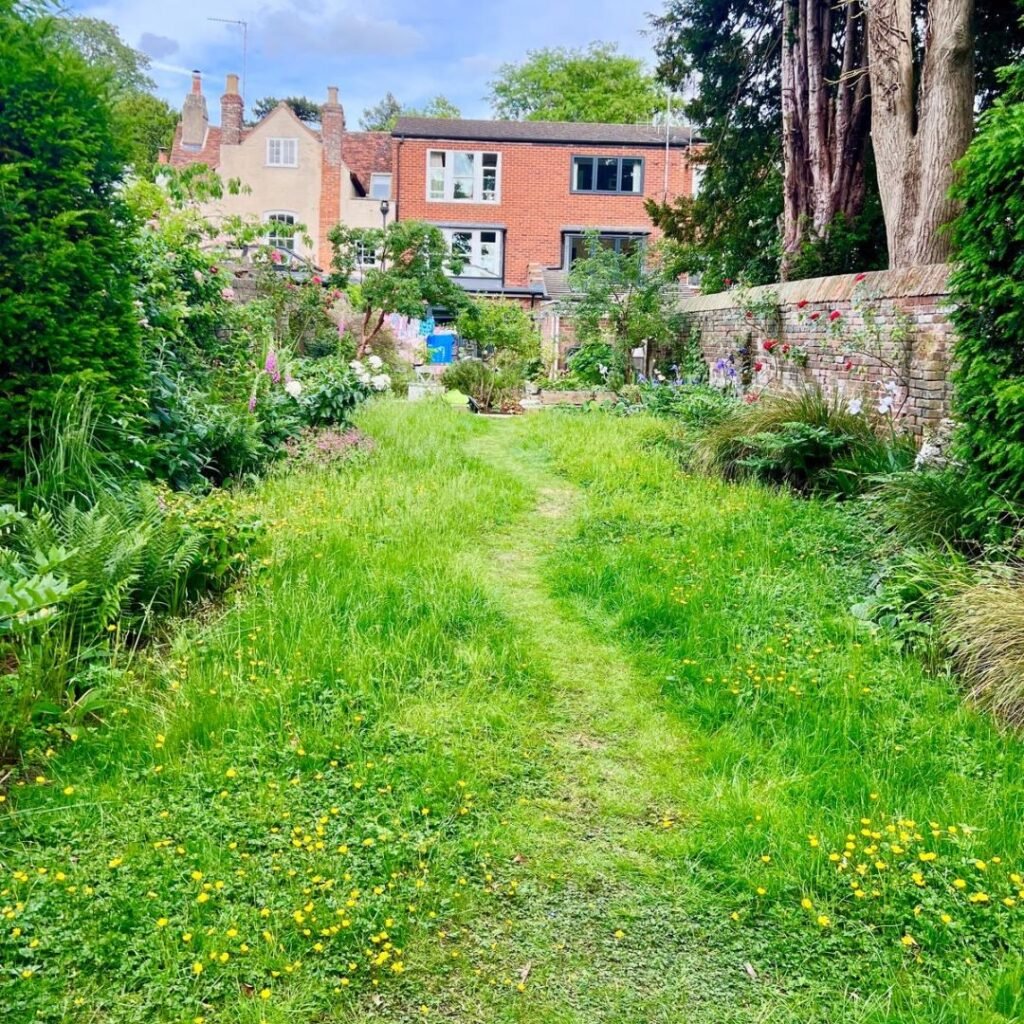
- Wild Design by Intent – a mown path through long grass is one of the most powerful things you can do: it signals intent, not neglect. Crucially it also keeps the space genuinely useable for everyone.
An Invitation to Experiment
No Mow May is an opportunity for people to take a first real step towards a wildlife friendly gardenwildlife. Its real power is in changing how people see their lawns and once you start seeing the garden as habitat, it’s very hard to stop.
But No Mow May is just the beginning.
Let it Bloom in June
June is when taller flowers start to come into their own, red campion, purple knapweed, ox-eye daisy. Leaving a space unmown through June allows these flowers to support the full lifecycle of the invertebrates that depend on them, not just give them a quick feed. Plantlife has a full guide to making the most of June.
Knee High July
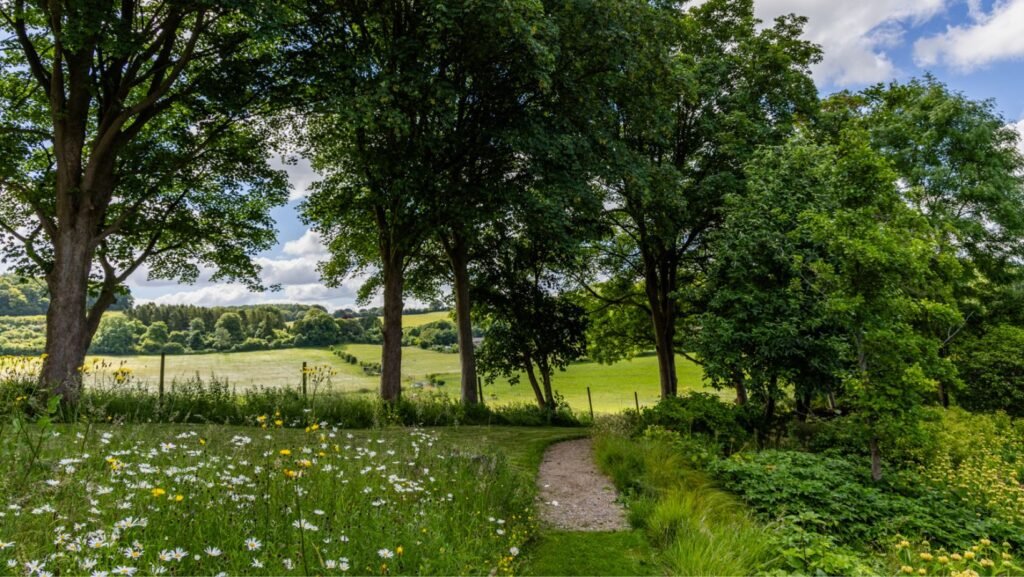
By July, long grass may not support as many wildflowers but provides vital sanctuary during hot summers — shelter for toads and voles, and seedheads that act as natural bird feeders for visiting finches. Traditional hay meadows are cut in mid to late July, and Plantlife suggests this as a natural moment to reassess: cut back, carry on, or leave a smaller patch running into late Summer.
And Beyond?
Plantlife calls the months that follow their “Mow-saic” approach — a patchwork of different lengths and management through autumn and winter that keeps something valuable going in your garden all year round.
Because the web of life that runs through our gardens doesn’t pause at the end of ‘Knee High July’! The hedgehog foraging in Autumn, the overwintering bumblebee queen in February, the moth laying eggs in September, they all need somewhere to go. A garden with a permanent wild corner gives them that and gives you something to look forward to in every season. It’s time to expand what beautiful can mean in your garden. To look beyond the lawn in isolation and see the bigger picture. Notice the birds and bees visiting. To appreciate the web of life who live in our gardens and depend upon it.
We are all part of the same web. Looking after nature is, in the end, looking after ourselves.
GreenArt’s Care and Development team look after lawns that are beautiful and wildlife-friendly because we don’t think you should have to choose. If you’d like to talk through what that could look like in your garden, book a free garden consultation.